How Mop Wheels Improve Surface Finishing and Polishing
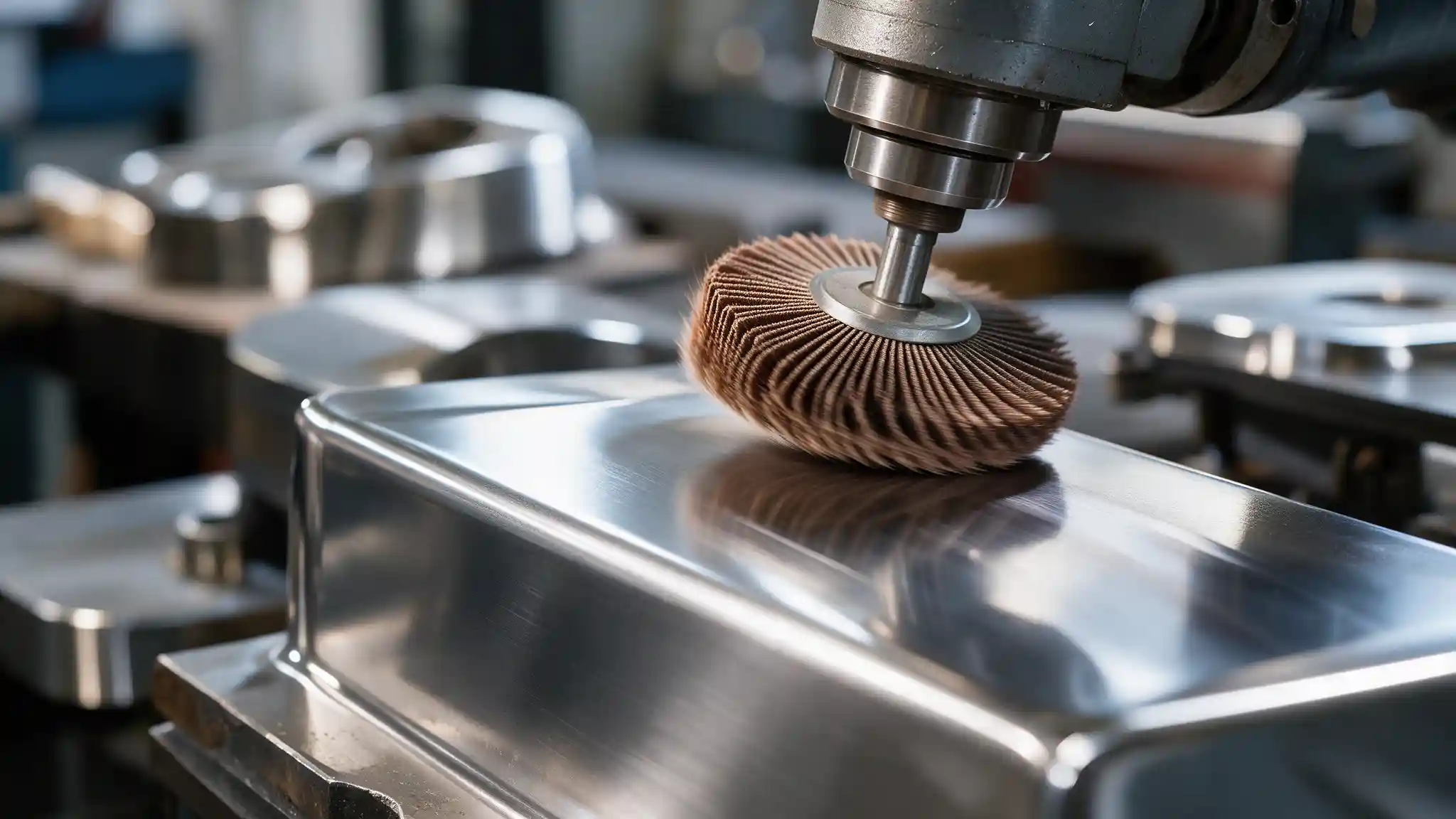
Consistency of surface finish is a critical aspect of metalworking, particularly when surface quality is the key to the appearance and/or dimensional accuracy of the product, and further manufacturing operations rely on the quality of the surface finish. Product appearance and performance may be impacted by scratches, uneven marks, and inconsistent polishing.
A mop wheel is a practical solution for controlled polishing, smoothing, and finishing various metal surfaces. A mop wheel is a type that is used for polishing and features flexible abrasive or fabric layers and can be used under certain applications, where controlled material removal and an even finish are required in this process; the equipment used is a mop wheel for polishing
What Is a Mop Wheel?
A Mop Wheel is a polishing and finishing tool made from multiple layers or sections of fabric, abrasive material, or other flexible components assembled around a central hub. As it is constructed, it adjusts to the surface being ground, as opposed to fixed grinding wheels. In use, the layers come into contact with the workpiece and are used to remove small surface defects, oxidation, marks, and unevenness.
Different materials, densities, and constructions can be used on a polishing wheel for the different results wanted. Within the industrial context, an industrial polishing wheel can be used with an appropriate polishing compound to provide a preliminary surface finish or to provide a bright decorative surface finish. It is related to the material, machine, operating conditions, and required surface quality.
How Do Mop Wheels Improve Surface Finishing?
A mop wheel for surface finishing is based on the principle of achieving a controlled degree of uniformity of contact between the wheel and the workpiece being finished. It is constructed in a flexible way to conform to contours, edges, and slightly irregular profiles rather than only to the peaks. This is helpful for components that experience variation in contact due to contact with rigid tools.
It can also be used as a surface polishing wheel for smoothing out surface irregularities, marks, and scratches, resulting in a more uniform surface. When metal finishing is carried out, the correct wheel construction and operating conditions are especially critical since excess pressure, improper speed, or the wrong compound can impact the finish. When the appropriate type is selected, material removal will not be excessive in the process of achieving controlled polishing.
|
Trivia 1: “Unlike rigid grinding tools, their flexible construction can follow contours, edges, and slightly uneven profiles.” |
Smoother and More Uniform Finishing
A Polishing Mop Wheel comes into repeated contact with the work, contributing to a better distribution of polishing action. This helps to control visible variations, polishing marks and uneven areas, especially when the wheel, compound, and operating speed are adjusted appropriately for the application to achieve smooth surface finishing.
Better Polishing of Curved and Irregular Surfaces
The flexible construction of a flexible polishing wheel makes it more effective at forming contours, edges, and profiles than some rigid polishing wheels. It can be used on curved surfaces, rounded components, or pieces of work that have areas that are difficult to reach, where uniform contact is required.
Key Benefits of Using Mop Wheels for Polishing
These are some of the key benefits of using mop wheels for polishing:
- One of the most important mop wheel benefits is that they can be used for finishing a range of workpiece shapes and sizes.
- They can be selected for preliminary polishing, intermediate refinement, or finishing, depending on the type of surface required.
- This allows mop wheel polishing to be used in general workshop operations as well as in more rigorous industrial finishing applications.
- Versatility is another benefit—various wheel types, densities, and shapes can be used with suitable compounds to get the desired finishing results.
- A predictable polishing process and reduced risk of surface damage can also be achieved through controlled application.
- This flexibility enables efficient industrial surface polishing and allows the finishing process to be customized to various materials, shapes, and appearance needs.
Common Applications of Mop Wheels
A wide variety of fabrication, manufacturing, and finishing activities rely on mop wheel applications. They are often used to smooth surfaces after cutting, forming, welding, or machining in metal fabrication workshops and for parts that require surface uniformity and appearance.
Fabricated metal parts, hardware and fittings, automotive parts, and decorative products can be finished with a metal polishing wheel. Another common application is stainless steel components, since polishing can enhance the aesthetic appearance and achieve the desired surface finish for these components, called stainless steel polishing.
Common uses include stainless steel processing, vehicle parts polishing, hardware polishing, architectural metalwork, decorative metal products, and general workshop use. The right wheel construction and polishing compound should be selected depending on the material and finish desired.
|
Trivia 2: "Mop wheels can be selected for preliminary polishing, intermediate refinement, or final finishing depending on their construction, density, and compound” |
Which Materials Can Be Polished Using Mop Wheels?
When the construction and compound of the wheel are suitable, several commonly processed metals can be treated using a Mop wheel for metal polishing. Materials such as stainless steel, aluminum, brass, and copper can be polished with appropriate configurations.
If the surface finish of stainless steel components needs to be controlled, a stainless steel polishing wheel should be chosen based on the desired surface condition and the polishing process. Aluminium polishing can also require a configuration suited to the metal's surface properties so as to prevent unwanted marks and excessive heat generation. The hardness of the material, surface condition, appearance, and finishing stage should all be considered before choosing the right wheel.
How to Choose the Right Mop Wheel
To determine how to choose a mop wheel, begin by considering the material being processed and the desired finish. The polishing action may be affected by the diameter, thickness, density, construction, and material of the wheel. The shape of the part being finished is also a key factor, as curved, flat, and detailed parts may need different wheels.
The polishing compound, type of mop machine, mounting arrangement, and recommended operating speed are additional factors to consider when choosing the Best Mop Wheel For Polishing. A wheel meant to roughen the surface may differ from one meant for final polishing. Getting the polishing wheel selection right helps ensure the desired finish and keeps the wheel in good condition, with controlled operation and a reasonable working life.
Match the Wheel to the Required Finish
The choice of mop wheel should be based on the desired surface finish. Preliminary work, intermediate polishing, and final polishing and finishing may use different wheel constructions, densities, and compounds. Choosing the right configuration avoids an overly aggressive polishing setup.
Check Size and Machine Compatibility
Before buying, check the wheel size, bore, thickness, and mounting method required by the polishing equipment. The wheel should also be used within the recommended speed range. Appropriate mop wheel size and machine compatibility support safer, more stable operation of the polishing machine wheel.
Tips for Better Results and Longer Mop Wheel Life
A few simple rules can improve finishing consistency and tool performance. Apply pressure at the recommended operating speed; excessive pressure or heat will cause the wheel to wear out faster. Choose a polishing compound suited to the material and the desired surface—good mop wheel maintenance and sensible polishing tips go a long way toward extending mop wheel life.
Regular inspection is also important. Check that the wheel is in good condition, with no damage, excessive wear, or contamination, before use, and replace it if performance is affected. Keep wheels in a clean, dry area, away from conditions that could damage the fabric or abrasives. Consistent operating practices help extend the useful life of mop wheels and support predictable finishing. UltraTouch provides all these benefits to give you better results.
Why Quality Mop Wheels Matter for Industrial Finishing
When consistency and repeatability are critical, a quality mop wheel can make a real difference. Well-controlled construction, materials, and production help produce consistent polishing action throughout a production batch. For industrial users, a dependable industrial mop wheel supports a smoother workflow and minimizes variation caused by inconsistent tooling.
Ultra Touch's emphasis is on providing finishing solutions suited to industrial needs. Choosing products from an experienced Mop Wheel Manufacturer can help businesses determine which mop wheel is appropriate for a particular material, application, and desired surface finish.
|
Trivia 3 : ‘Applying excessive pressure can generate more heat and cause the mop wheel to wear faster, so controlled pressure is important during polishing. ‘ |
Conclusion
A mop wheel can be used to polish, smooth, and refine a variety of metal parts. Its flexible construction ensures good grip on flat, curved, and irregular surfaces, with controlled finishing throughout. Selecting the appropriate wheel material, density, size, speed, and compound is essential for consistent results. If you need a dependable mop wheel for polishing, explore Ultra Touch's product line to find the wheel configuration best suited to your surface finishing needs.
|
Explore Ultra Touch’s quality mop wheels for reliable metal finishing and polishing solutions. Contact Us Now to find the right mop wheel for your application. |
Frequently Asked Questions
1.What is a mop wheel used for?
Mop wheel uses include polishing, smoothing, and refining metal surfaces after fabrication or machining, helping eliminate fine marks and enhance the appearance of different parts.
2. Can mop wheels be used for stainless steel polishing?
Yes, a mop wheel for stainless steel can be used for polishing as long as the wheel structure, abrasive, and polishing compound are matched to the required finish.
3. What is the difference between a mop wheel and a buffing wheel?
The distinction between mop wheel vs buffing wheel terminology can vary from manufacturer to manufacturer. Both can be used for polishing; the choice depends on the construction, the material, and the intended final stage of the process.
4. How do I choose the right mop wheel?
When selecting a mop wheel configuration, keep in mind the required finish, the material, the wheel construction, the wheel dimensions, the polishing compound, and whether the wheel is compatible with the polishing machine.
5. What industries commonly use mop wheels for surface finishing?
Mop wheels are commonly used in metal fabrication, automotive, engineering, stainless steel processing, hardware manufacturing, architectural metalwork, and industrial equipment manufacturing for polishing, smoothing, and refining metal components.
6. How should industries select a mop wheel for production polishing?
Industries should consider the metal type, required surface finish, wheel construction, density, diameter, machine compatibility, operating speed, and polishing compound. The correct combination helps achieve consistent finishing results while controlling heat, wear, and surface damage.