Metal Cutting Wheel vs Grinding Wheel: Complete Metalwork Guide
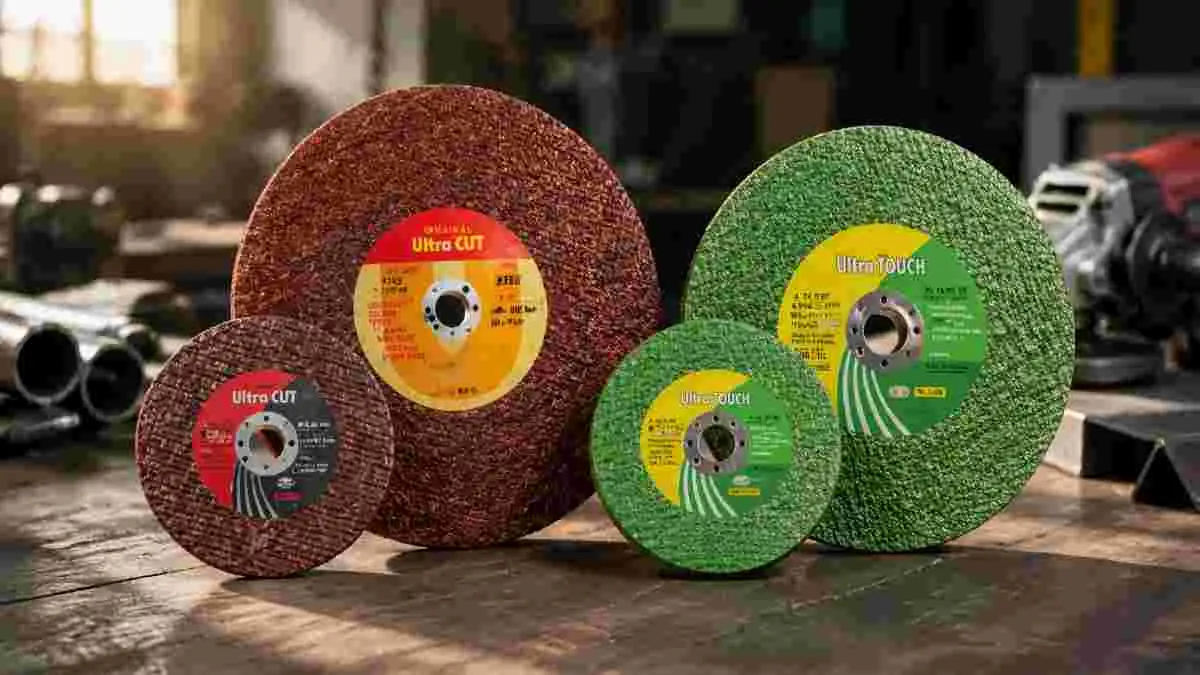
Monday morning, busy fab shop. Someone grabs the angle grinder, slaps on whatever wheel's closest, and starts cutting into an MS pipe. A few seconds in it starts wobbling, the cut goes ragged, and now the job's taking twice as long. Nine times out of ten someone picked up a grinding wheel when they needed a cutting wheel. Or the other way round.
Doesn't sound like much. It is, though. Wrong wheel and you're stuck with a rough finish, wasted metal, a slower job, and honestly, a bit of a safety risk too. Fabricators, welders, maintenance people, workshop owners, all of them need to know the real difference between a metal cutting wheel and a grinding wheel. It's a small thing. But it makes the day easier.
What actually separates the two, and how do you pick between them without standing there for twenty minutes trying to decide? That's really what we're getting into here.
Cutting Wheel vs Grinding Wheel: What's the Difference?
Pick up a cutting wheel and a Grinding wheel together and, honestly, they can trick you at first glance. Round, abrasive, both clamp onto the same grinder body. Look closer though and the resemblance stops fast.
- Cutting wheels are thin. Built to slice through metal, edge first.
- Grinding wheels are chunkier. They wear a surface down using the face, not the edge.
- One's quick and leaves a narrow kerf. The other's slower, but smooths things out.
- Turn an abrasive cutting wheel sideways and use it like a grinder? Good chance it cracks.
- A grinding wheel for metal won't cut anything. It shapes, deburrs, smooths, that's about it.
Cutting wheels split metal apart, and grinding wheels come in afterward to clean things up. Get that mixed up on a real job and you're not just risking a rough finish, you could be looking at something genuinely dangerous.
What Is a Metal Cutting Wheel Used For?
Ask most fabricators and they'll tell you a Metal Cutting Wheel does exactly what it sounds like it should. It cuts through metal fast, using that thin edge, and it's usually the very first tool out before anyone starts welding or putting things together.
- Cutting MS pipes, rods, angles to size
- Slicing sheet metal, flat bars too
- Trimming rebar on site
- Cutting stainless steel parts in fabrication work
- Fast repair cuts when there's no time to spare
Because it's thin, a Cutting wheel for metal tends to run cooler and waste less material as you go, and you'll notice that difference pretty quickly once you're cutting something that actually costs money, like stainless.
What Is a Grinding Wheel Used For?
Compare that to a metal grinding wheel, which is built tougher across the board, thicker and made to take pressure without falling apart on you. When the job's about smoothing something out rather than separating it, this is what you'd reach for instead.
- Knocking down weld spatter
- Deburring edges after a cut
- Shaping parts before finishing
- Stripping off rust, old paint
- Prepping a surface before painting
An abrasive grinding wheel takes sideways pressure a cutting wheel would snap under in seconds.
|
Did You Know? Cutting wheels usually run under 3mm thick. Grinding wheels, 6mm or more. Not just a size thing. It's what keeps one safe for cutting and the other safe for grinding. |
Metal Cutting Wheel vs Grinding Wheel: Comparison
Want the metal cutting wheel vs grinding wheel breakdown without reading everything above? Here it is.
| Feature | Cutting Wheel | Grinding Wheel |
|---|---|---|
| Purpose | Separating metal into pieces | Shaping, smoothing, finishing |
| Design | Thin, flat profile | Thicker, often depressed-centre |
| Application | Used on the edge of the wheel | Used on the face of the wheel |
| Material Removal | Fast, narrow kerf | Gradual, broader surface area |
| Surface Result | Clean-cut edge | Smooth, even surface |
| Typical Use | Pipes, rods, sheets, rebar | Welds, edges, rust, coatings |
Can a Cutting Wheel Be Used for Grinding?
No, and here's why. A cutting wheel is thin and, frankly, a bit brittle by design. It's only meant to touch metal on its edge, so press it sideways the way you'd use a grinder and it can shatter right in your hand.
- Not built for sideways pressure
- Higher chance it snaps mid-use
- Fragments flying off at high RPM, not something you want near your hands
- Use the wheel for what it's actually made for
Can a Grinding Wheel Be Used for Cutting?
A grinding wheel can get you through soft metal if you're really stuck. Wouldn't rely on it, though. Thicker wheel, rougher and wider cut, more strain on the machine, a longer wait.
- Manufacturer specs keep cutting and grinding wheels separate for a reason
- Grinding wheels aren't built for a clean, precise cut
- More heat, which can mess with the finish
- Use a proper abrasive cutting wheel instead. Simply safer.
How to Choose the Right Wheel
Here are some of the tips to choose the right wheel:
- Know your metal first. Mild steel, stainless, and cast iron don't behave the same way once a wheel actually touches them.
- Then work out what you're actually trying to do. Cutting, grinding, or honestly, sometimes a bit of both.
- Check the thickness of what you're actually working on.
- Match wheel size to the machine, not the other way round.
- Confirm arbor size and machine compatibility before buying.
- Never push a wheel past its rated RPM.
- Think about the finish. A finer grinding wheel usually helps.
- If you're still unsure after all that, trust the manufacturer's specs over your gut feeling.
Common Mistakes to Avoid
Some of the common mistakes are:
- Grabbing a cutting wheel for grinding, or a grinding wheel for cutting
- Skipping the speed and size specs on the wheel
- Using a wheel that's cracked or chipped, still
- Pushing RPM past what's rated
- Fitting a wheel that just doesn't match the machine
- Treating cutting and grinding wheels like they're the same thing
|
Quick Fact Most wheel accidents on a shop floor aren't about a faulty wheel. It's mismatched RPM, or the wrong wheel for the job. |
What Should Buyers Look For?
Right wheel starts with the right supplier. A solid Industrial Cutting Wheel or industrial grinding wheel needs even grain structure, proper bonding, clear specs on the label. Nothing vague.
- Certifications, consistent batch quality
- A decent spread across different abrasive wheels for metalworking
- Both cutting and grinding options kept in stock
- Reliable supply for repeat orders
Checking out Metal Cutting Wheel Manufacturers in India? Don't just chase the cheapest price. Consistency and support matter more once you're placing repeat orders.
Stick with known Metal Cutting Wheel Suppliers in India or Metal Cutting Wheel Dealers in India and you'll usually get fewer delivery headaches, plus someone who'll actually answer a spec question.
|
Did You Know? A worn-out wheel doesn't just cut badly. It loads up the grinder motor too, and that shortens the tool's life. |
About Ultra Touch
Ultra Touch was founded in 1995, and is one of India's best manufacturers, suppliers, dealers and wholesalers of heavy-duty power tools. The company offers the highest quality and reliable power tools supported by a robust pan-India distribution network. Their tools are manufactured to perform in rugged industrial and professional conditions – designed to be robust, accurate and dependable. Ultra Touch manufactures ergonomic tools with a center of gravity positioned strategically and heat-resistant grips to keep the tools from becoming too hot. High-grade parts, along with well-balanced motors, enable the tools to cut, grind, drill and finish materials consistently without tiring the operator out.
FAQs
1. So what actually makes a cutting wheel different from a grinding wheel?
Ans: Honestly, it comes down to how each wheel touches the metal. A cutting wheel is thin and slices straight through using its edge, one clean pass. A grinding wheel's thicker, working off its face instead, smoothing rough spots or cleaning up a weld. One splits metal apart, the other shapes what's already there.
2. Would it work to just use one wheel for cutting and grinding both?
Ans: It wouldn't, not safely anyway. Each wheel's built around a specific job, the thickness, the bonding, all of it's different. Push a cutting wheel into grinding work and it can crack or shatter under that sideways pressure. Try cutting with a grinding wheel and you'll get a slow, rough job that strains the machine too.
3. Why does wheel thickness matter so much?
Ans: It comes down to pressure, basically. A thin wheel cuts efficiently since there's less material to push through, but it can't handle sideways force. A thicker wheel absorbs that side pressure, which is exactly what grinding puts on it. Get the thickness wrong for the job and you're setting yourself up for a wheel failure.
4. What's the right way to figure out a wheel's correct RPM?
Ans: Look at the label on the wheel itself, every one carries a rated maximum RPM printed right there. Then check what your grinder actually runs at, and make sure the machine's speed never goes past what the wheel's rated for. Mismatched RPM causes more shop floor accidents than almost anything else.
5. What should I check before buying wheels in bulk for industrial use?
Ans: Quality that doesn't waver from batch to batch matters most, along with proper certifications on the wheel itself. It's worth paying attention to who's supplying it too, not just what's printed on the box. Do they keep stock reliably, and will specs stay the same order after order? A dependable supplier beats a lower price.
6. Should I grab a cutting wheel or a grinding wheel to deburr a metal edge?
Ans: Grinding wheel, no question. Deburring means smoothing a rough or sharp edge after a cut, not slicing through anything, and that's exactly the job a grinding wheel is built for. A cutting wheel's too thin and brittle to handle that kind of surface work safely. Reach for the grinding wheel when you're cleaning one up.
Final Takeaway
A metal abrasive wheel used for cutting and one used for grinding, they're doing two different jobs. Cutting wheels separate. Grinding wheels smooth. Get that right and your output, your tools, your safety, all of it benefits.
| Looking for reliable metal cutting wheels or grinding wheels for industrial use? Contact Ultra Touch for bulk pricing, dealer support, and customized abrasive wheel solutions. |