How to Choose a Demolition Hammer for Concrete Breaking
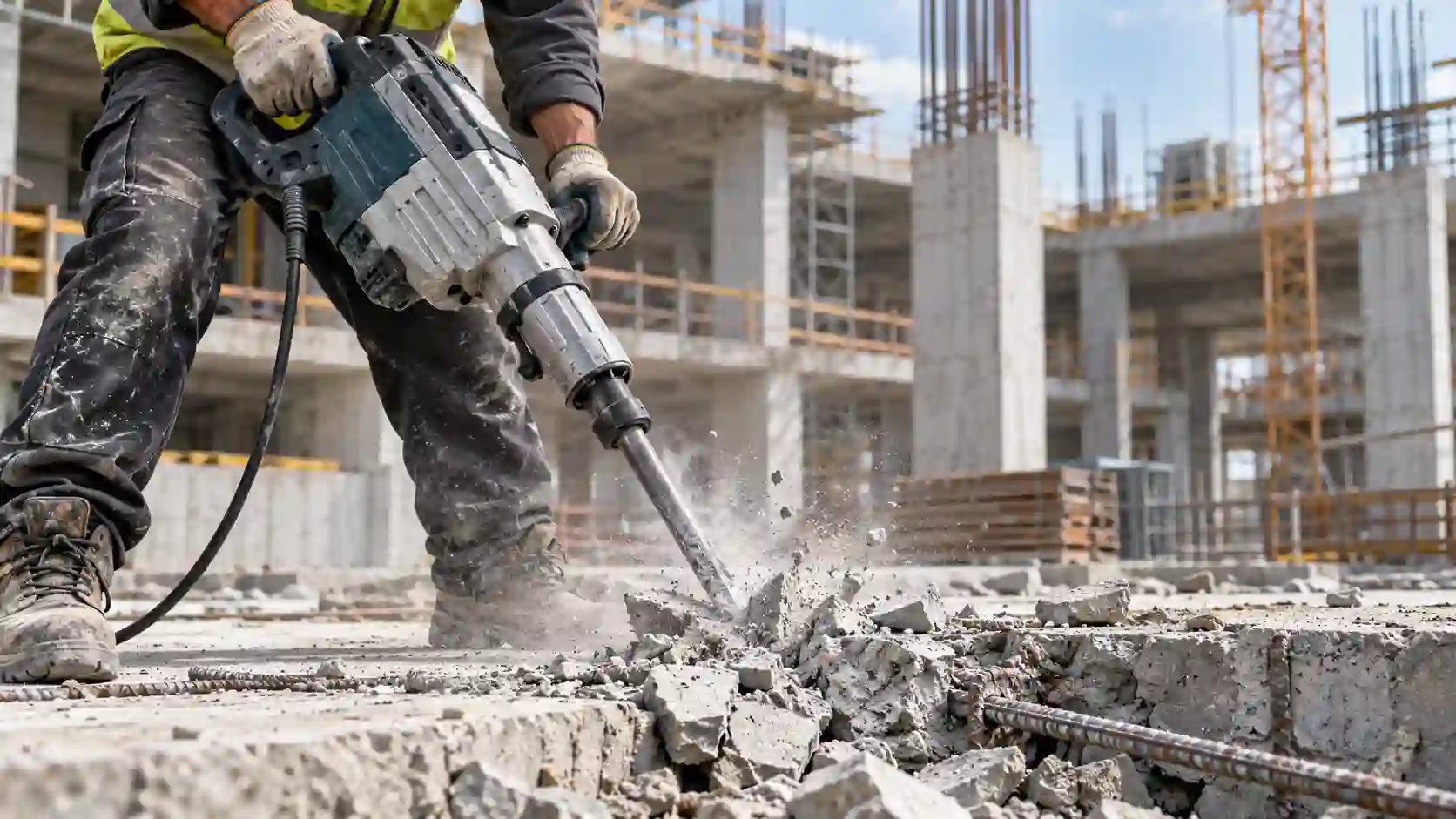
A contractor selects a heavy breaker for a slab job since it appears to be a strong breaker. The crew is tired by day 3, the chisel continues to skate on the surface and the time has slipped. There was no fault in the machine. The work was just a bad idea.
This often occurs when site managers are not as forthright as they should be. The incorrect demolition hammer is a liability on productivity, operator morale and costs. Rework time, idling time, broken chisels and late handovers increase the bills. Even worse, a tool that attacks the operator is a danger to safety.
This guide will help you choose the appropriate demolition hammer for concrete. Continue reading and the person who buys your next product will begin to receive a return from their investment the first time they turn your back on you.
Start by Identifying the Concrete Breaking Task
Study the job prior to comparing models. The grade of concrete, thickness, access and direction of breaking are all factors in determining what concrete breaking tool for construction will work. There's a right and a wrong way to fight a thin screed and a foundation pad. Make a note of these points as they all eliminate potential choices very quickly:
- Concrete age and grade as a resistance to impact with cured high strength mixes.
- The thickness of the slab, beam or wall.
- Space around the work area and access for the operator.
- Turning back and forth: from up to down or from side to side or overhead.
Breaking Floor Slabs vs Vertical Concrete Walls
Compare the two side by side: the breaking direction has an impact on the amount of work gravity does, and how much weight the operator carries.
| Factor | Floor Slabs | Vertical Concrete Walls |
|---|---|---|
| Breaking Direction | Downward, with gravity assisting the blow | Horizontal, with no help from gravity |
| Machine Weight | A heavier machine can simply rest on the concrete | The operator carries the full weight of the demolition hammer for concrete at chest or shoulder height |
| Operator Fatigue | Low, since the machine's weight does useful work | High, as every extra kilo turns into fatigue within the hour |
| Control and Safety | Stable chisel placement and good control | Control drops, chisel placement suffers, and safety becomes a concern |
| Best Machine Choice | Heavier, high-impact models | Lighter, well-balanced models with a good side handle |
Plain Concrete vs Reinforced Concrete
Clean concrete fragments fall in a loose manner. That is not the case for reinforced concrete. The chisel strikes steel bars, bounces back and dulls quickly causing the working to be slowed down. Often it is not enough to have chiselled it. Typically a crew will saw through the concrete, uncover the rebar and cut with a rebar cutter or gas torch. For sites that demand repeated blows, opt for an Industrial Demolition Hammer India projects demand: one designed for repeated blows and a rugged tool holder. About to hit the first bar, weak machines stall.
Compare Demolition Hammer Performance with the Workload
Too long of a specification sheet can be confusing. Rather, choose a demolition hammer for contractors by finding out what the work actually requires. The type of concrete to be demolished, hours of daily use and position of work. The following two sections describe the numbers that really count.
Impact Energy, BPM and Actual Breaking Performance
The unit of impact energy is joules. Indicates when each strike has landed hard or soft. The Blows Per Minute (BPM) indicates how many times it drops. The two are important but neither is the entirety of the story. A high BPM machine with low Demolition Hammer impact energy will not damage a lot of hard concrete when it bounces back. A slower, harder hitting machine will remove more material per hour. In addition, brands could be testing energy based on various test standards; that is, advertised values do not necessarily match. Request method of testing, and test on actual break sample.
Tool Weight, Working Position and Operator Control
More weight does not necessarily equal better. A heavy weight demolition hammer works well for floor breaking, as it uses the weight of the machine to do the work. That same weight can be an obstacle in vertical, overhead or confined areas. The operator has difficulty maintaining the chisel and vibration starts to increase and accuracy decreases. Compared with typical working weight. Opt for a side handle that feels comfortable and vibration dampening if that is a requirement; these will keep the operator happy on long shifts.
Select the Right Chisel for the Removal of Concrete
As with the choice of machine, it is as important to select a chisel that cuts well, as it is to select the machine itself. Every shape is designed for a particular purpose:
- Pointed chisel: Initiates the break and can be used to work through thick concrete by focusing the force on one point.
- Flat chisel: cuts off edges, cleans up after breaks and removes damaged surfaces.
- Spade chisel: will cut thin layers like screed or tile, and cut channels and remove slabs.
It should be the size that adapts to your machine's tool-holder system (e.g. SDS-Max or hex). Energy is lost and the holder is worn out if the shank mismatches. The understanding of the primary demolition hammer chisel types can help you stock the necessary set from the beginning.
Compare Demolition Hammers Using a Job-Based Checklist
Use this table as a demolition hammers buying guide to help you while talking with a supplier or on the job site. Before deciding, tick each row.
| Factor | What to Check | Why It Matters |
|---|---|---|
| Concrete Type | Plain or reinforced; thickness | Decides the impact strength you need |
| Working Position | Floor, wall or overhead | Affects the weight your crew can handle |
| Impact Energy | Joules, not BPM alone | Shows true breaking power |
| Weight | Machine weight vs. the task | Controls fatigue and accuracy |
| Chisel Compatibility | SDS-Max, hex or other holder | Avoids mismatched tools |
| Electrical Supply | Power rating and site voltage | Prevents weak output and tripping |
What are Contractors to Check Before Buying?
Paper specifications only come in the beginning. Talk to a reputed Demolition hammer supplier in India or a Demolition Hammer Manufacturer In India and verify these aspects before settling the money:
- Specifications, such as impact energy, weight and power rating, should be specific to the model, and should be provided in writing.
- A live demonstration on the concrete that is similar to your site conditions.
- Warranty terms and conditions, and exceptions.
- Availability of spare parts such as carbon brushes and chisels.
- Service is available near your project site.
A hammer with no part in the ground will be much more expensive than a marginally more expensive hammer with a good back-up.
Case Study: When One Hammer Slowed the Site
One industrial contractor has used a single heavy hammer for floor slabs and wall openings in his industrial renovation project. The floors were good. Operators became tired in an hour on the walls, chisel placement was erratic and progress was slower. A lighter, more balanced hammer was used for vertical work, allowing the heavy hammer to be used only on floors, thus restoring the pace and reducing fatigue.
Why Choose Ultra Touch?
When a power tool buyer is aware of site realities, it is easier to purchase power tools. Here's what Ultra Touch offers:
- Make tools that are tough to make in construction and industry. Develop tools that are hard to make in construction and in industry.
- Find clear specifications that support you to match a machine to your task.
- Practical advice on modelling for contractors.
- Support on spares and after sales enquiries.
FAQs
1. Can One Demolition Hammer Do Both Floors and Walls?
Yes, with limits. A midweight demolition hammer, suitable for those performing mixed jobs can perform both. Floors are appropriate for heavier models; and walls for lighter, balanced machines that minimize strain. If your job is one way, go for that role and make a small concession for the other role.
2. Is there always a correlation between higher impact and faster breaking?
Not always. Other factors affecting speed are BPM, weight, and chisel sharpness and operator control. Excessive energy in an operator's body leads to fatigue, which in turn slows work. Match the energy of the demolition hammer to thickness and strength of the concrete and not to the largest number on the sheet.
3. Which Chisel Is Suitable for Thick Concrete?
A pointed chisel, it is focused and it initiates the crack. Use flat chisels to clean up. As with all things, even the best type of demolition hammer chisel can't compensate for a machine that lacks energy for the thickness.
4. Will a Rotary Hammer Do the Job?
Only for light chipping. Rotary hammers are primarily used for drilling operations, but also for a limited amount of chiselling. A special demolition hammer will provide greater power when used on thick slabs and walls and will have better durability when operating for extended periods of time.
5. When should chisels be changed?
When the tip of a chisel starts to round off or the edges chip, then replace or re-sharpen it. A dull chisel slows up work and puts additional stress on the machine and the operator. Check it before each change of shifts.
6. Electrical Supply for a Demolition Hammer?
Compare the power rating (on the nameplate) to the voltage of your site. Extension cables should be the right size for the job, and are long and narrow, so they lose voltage and make weak blows. If you are operating a generator at a remote location, verify your generator is capable of starting up the load.
Find the Right Demolition Hammer at Ultra Touch
The best demolition hammer is the one that fits the job, the position and the crew working on the job. Understand and compare the impact energy logically, match chisel and check service back-up before purchase. Then all the changes will go more smoothly.
|
Have a look at the range on the Ultra Touch product page and consult with a trustworthy demolition hammer supplier in India with regards to the project. Contact Us Now. |