How to Make Your Aluminum Saw Blades Last Longer
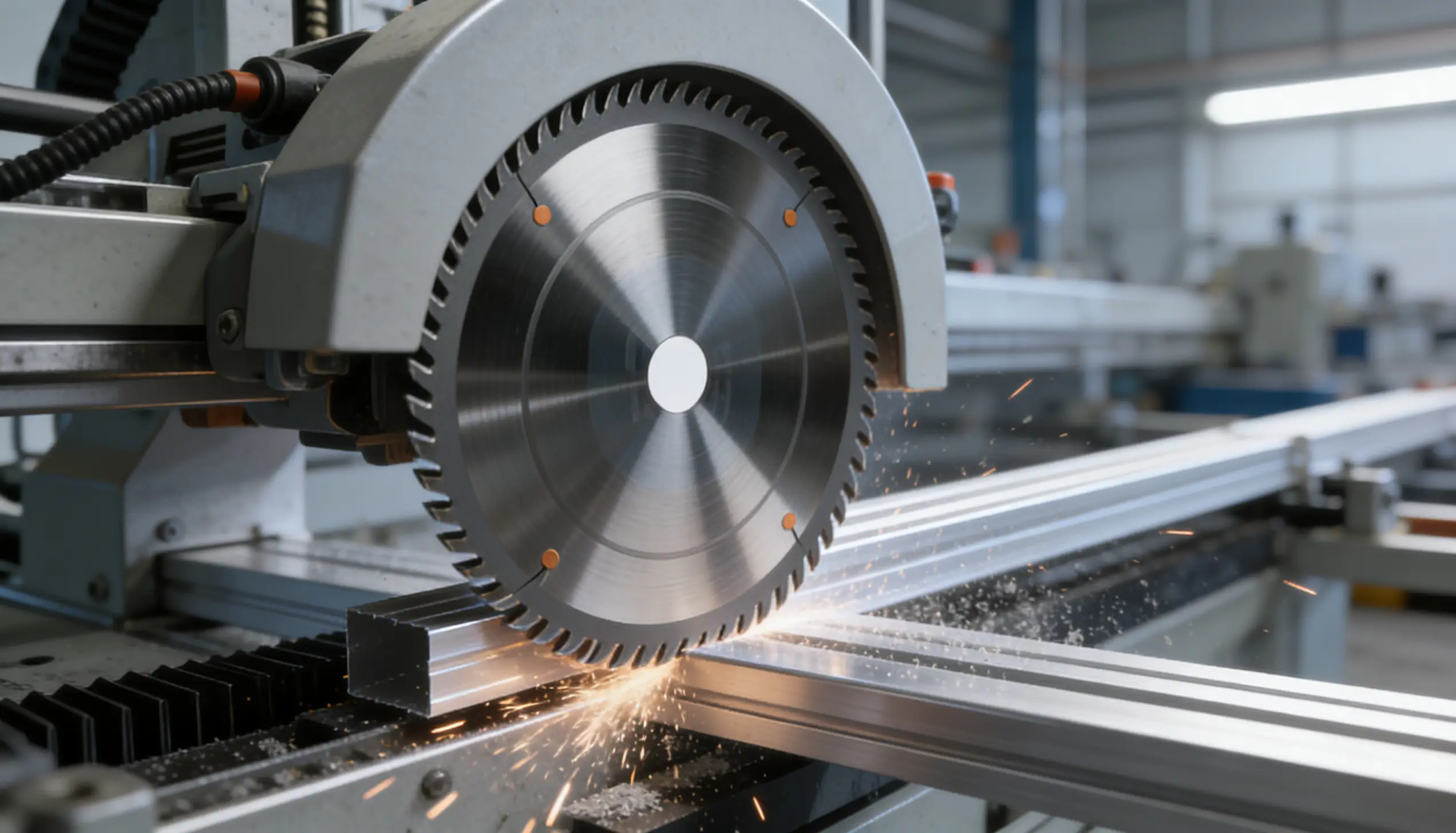
Walk into any busy fabrication unit in India, and you will notice something predictable—a saw blade change happening far too often. The saw machine gets blamed. The operator gets blamed. Occasionally the supplier takes the fall. But step back and look at what actually happened, and the answer is almost always simpler: wrong cutting blade, wrong speed, no cleaning routine.
Fixing those three things does not require new equipment. It does not require a bigger budget. It requires knowing what you are actually working with—and then being consistent about it.
Aluminium Is Not as Simple as It Looks
Most people treat aluminium like a soft, forgiving material. And yes, it machines easily compared to steel. But cut it wrong and it becomes a problem fast. The metal is sticky. Under friction and heat, it grabs onto tooth surfaces, packs into gullets, and builds up an edge that dulls and chips the cutting blade long before its rated life is over.
Common reasons blades fail before their time:
- Running the saw machine at the wrong spindle speed — too fast generates excessive heat; too slow causes tooth drag
- Using a wood cutting blade on non-ferrous metals, leading to gumming, tooth deformation, and unsafe finishes
- Skipping post-shift cleaning, allowing pitch and aluminium residue to harden inside gullets
- Incorrect bore mounting — a saw blade not seated flush on the arbor creates micro-vibrations that fracture carbide teeth prematurely
A handsaw blade meant for timber will gum up completely on aluminium. The geometry is wrong. The tooth angles were not designed for a non-ferrous material. What you get is a rough, burred finish and a blade you end up replacing in two shifts.
Start With the Right Blade for the Job
This sounds obvious, but it is where most procurement decisions go wrong. A blade to cut aluminium is a specific product — not a generic circular saw blade pulled from the shelf because the diameter matches.
Key characteristics of the right aluminium saw blade:
- Material: Tungsten Carbide Tipped (TCT) teeth that hold a sharp edge under lateral cutting forces — far superior to a standard hacksaw blade or carbon steel option
- Tooth geometry: Low hook angle of 5°–15° with Triple Chip Grind (TCG) configuration — shears cleanly without grabbing
- TPI range: Higher tooth count circular saw blades for thin-wall extrusions; medium TPI for solid bar and tube stock
- Coating: PTFE or non-stick finish on the plate body to actively reduce heat and friction between each cut
Always verify these specifications with your Saw Blade Manufacturers In India before placing a bulk order. The savings on a cheaper saw blade is routinely swallowed by rework costs and unplanned changeover time.
Technical Specifications: What to Look For!
Every blade to cut aluminium operates within a design envelope — a defined combination of speed, feed rate, and geometry. The table below summarises what experienced fabricators and Saw Blade Suppliers in India recommend as general performance benchmarks:
| Performance Factor | General Recommendation |
|---|---|
| Blade Material | Tungsten Carbide Tipped (TCT) |
| Hook Angle | 5° – 15° (low hook for aluminium) |
| Tooth Geometry | Triple Chip Grind (TCG) |
| Recommended RPM Range | 3,000 – 6,000 RPM |
| Plate Coating | PTFE / Non-stick finish |
| Resharpening Cycles | 3 – 5 cycles (quality blades) |
| Cleaning Frequency | After every shift |
| Professional Service Interval | Every 50 operating hours |
Speed and Feed: The Numbers That Actually Matter
Every circular saw ships with a rated speed range. For most aluminium-rated Circular Saw Blades, that sits between 3,000 and 6,000 RPM depending on diameter and tooth count. These are not conservative suggestions — they reflect the metallurgical limits of the carbide and the blade body.
What happens when you ignore the speed chart:
- Running a hacksaw blade or saw blade above rated speed destroys carbide life and causes heat-fused aluminium residue inside gullets
- Forcing the cutting blade through material to compensate for incorrect speed chips teeth rapidly
- Too-slow RPM on a wood saw machine adapted for metal causes snatching and lateral tooth damage with every pass
Match your saw machine's spindle speed to the manufacturer's chart. If your machine has no adjustment capability, raise this with your tooling supplier before the next bulk order. It is a simple check that routinely adds 30 to 40 percent more cuts per blade.
Maintenance Habits That Genuinely Extend Life
A disciplined maintenance routine can add 40–60% more service life to any aluminium saw blade. It requires no special equipment — just consistency.
After Every Shift
- Remove the saw blade from the wood saw machine or profile cutter and brush all swarf and aluminium deposits from gullets thoroughly
- Soak in kerosene or an alkaline cleaning solution for 10–15 minutes wherever pitch build-up is visible on tooth faces
- Inspect under good lighting; mark any chipped teeth for the tool room to assess before the next run
After Every 50 Operating Hours
- Send for professional resharpening — quality blades sourced from reliable Saw Blade Suppliers In India typically support three to five resharpening cycles before needing full replacement
- Check bore dimensions for wear — a loose arbor fit is both a cut-quality problem and a floor safety hazard
- Test the saw blade plate for flatness — even minor dishing increases motor load and distorts finished cut quality
Real-Life Results From the Field
The results from workshops that made these changes speak for themselves. Here is what fabricators and contractors across India reported after switching their approach:
- Aluminium door and window fabricators in Gujarat cut saw blade replacement frequency by over 35% after switching to TCT circular saw blades and enforcing end-of-shift cleaning
- An auto-components supplier in Maharashtra eliminated chatter-related scrap entirely by aligning saw machine RPM with the manufacturer's published speed chart
- A site contractor in Delhi using a handsaw blade for aluminium profile work extended blade intervals by matching TPI precisely to material thickness
- Bulk traders evaluating Saw Blade Dealers In India made resharpening support a mandatory shortlisting criterion — reducing warranty claims and protecting resale margins
What Experienced Procurement Teams Know!
For traders and procurement teams, the lesson is consistent across sectors: saw blade unit cost is the wrong metric. What matters is cost per cut — calculated only when you factor in changeover time, rework, and tool room labour.
What specification-matched sourcing looks like in practice:
- The best saw blade is not the cheapest option on the shelf — it is the one that runs two full shifts without a single unplanned stop
- Sourcing from verified Saw Blade Manufacturers in India ensures genuine, performance-tested products reach buyers reliably and on schedule
- A wood cutting blade used on aluminium without proper specification matching always costs more in rework than a correctly specified TCT alternative
- OEM clients increasingly audit tooling standards — sourcing through established Saw Blade Dealers in India with genuine after-sales support is becoming a commercial requirement, not just good practice
FAQs
Q1. How often should I replace my aluminium saw blade?
Ans: Depends on usage. With proper cleaning and correct RPM, a quality TCT blade lasts weeks. Skip maintenance and it fails within days. Resharpening extends life significantly.
Q2. Can I use a wood cutting blade on aluminium?
Ans: Avoid it. Wrong tooth geometry causes grabbing, gumming, and rough finishes. A dedicated aluminium saw blade costs less in the long run than the rework a wood blade creates.
Q3. What RPM should I run my saw machine at for aluminium cutting?
Ans: Generally 3,000 to 6,000 RPM, depending on blade diameter. Always follow the manufacturer's chart. Wrong speed kills carbide faster than anything else on the shop floor.
Q4. How do I clean my saw blade after a shift?
Ans: Brush out gullets, then soak the blade in kerosene or alkaline solution for 10 to 15 minutes. Simple habit, big difference in how long the cutting blade actually lasts.
Q5. Is a cheaper saw blade worth buying in bulk?
Ans: Rarely. Low-cost blades increase changeover time, rework, and tool room labour. The best saw blade is one that runs two full shifts cleanly — not the cheapest one on the shelf.
Conclusion
Saw blade longevity is a production decision. The best saw blade that stays sharp across two full shifts is worth significantly more than a cheaper option that needs changing before lunch.
The non-negotiable baseline for every aluminium cutting operation:
- Keep the blade clean after every shift
- Run it at the correct RPM on a properly configured saw machine
- Mount every circular saw, handsaw blade, or hacksaw blade correctly on a flush, correctly sized arbor
- Source from Saw Blade Suppliers in India who back the product with resharpening support and genuine specifications
That is the whole system. It is not complicated — it just needs to be followed. Ultra Touch has been supplying circular saw blades, TCT variants, wood cutting blade options, and dedicated aluminium saw blade ranges since 1995 — backed by a nationwide dealer network and genuine after-sales support.
Contact Ultra Touch Today for the right saw blade and a bulk quote from dependable Saw Blade Dealers in India.