Corded vs Cordless Drill Machine: Which One Should You Really Choose
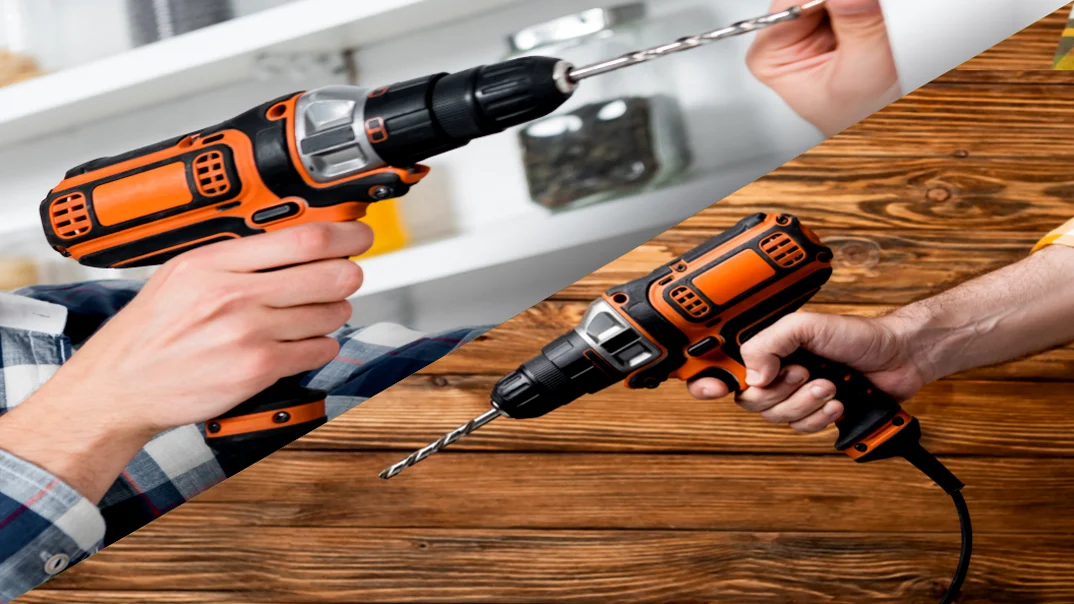
Picking a good drill feels simple at first - but once you check what's out there, things get messy fast. You end up staring at numbers like wattage or twist strength, battery life, spin speed; one motor type might last longer while another costs less - each tiny thing adds noise when all you want is something that works.
Yet right in the middle of this whole thing, a single thought pops up again and again:
“Should I buy a corded drill or a Cordless Drill Machine?”
This blog explains things clearly, step by step, so you end up choosing something that actually helps you get stuff done quicker, easier, maybe even enjoy it a bit.
Understanding the Cordless Drill Machine: Why It Has Become the New Favorite
The main reason why people love Cordless Drill Machines is because they’re not stuck. You can move them around without tripping on cords, go up a ladder hassle-free, fit into narrow spots, tackle jobs outside, or patch things up where electricity doesn’t reach.
A few years back, cordless drills weren't nearly this good. Thanks to better battery tech like lithium packs, along with motor upgrades that skip brushes, their power’s jumped up fast - so today they match old plug-in models more often than not.
Why users love cordless drills today
- No cables to manage
- Works in any location
- Lightweight, compact, and easy to carry
- Ideal for technicians who move frequently
- Fast-charging and long-lasting batteries
- Perfect for quick installations and home repairs
When putting together furniture, boring into woods, mounting shelves, handling wiring jobs - or anything needing quick moves cordless drills just fit right. Less mess around, quicker results, work flows better 'cause of them.
Why Corded Drills Still Continue to Dominate in Certain Jobs
Few people know this, but plug-in drills haven’t disappeared even now that wireless gear is everywhere. Actually, a lot of job shops keep using them since they deliver steady strength no battery-powered version can handle. That’s their big edge.
A corded drill gives steady power the whole time it’s running - no fading, no pauses to refill charge, nothing slowing down.
Where corded drills clearly win
- Heavy drilling on concrete or stone
- Long, continuous work sessions
- Fabrication and workshop operations
- Projects needing strong torque
- Professional construction tasks
If you’re boring through rebar, steel beams, or dense wood all day, a wired drill beats a wireless model - no question. It stays cooler longer while running nonstop. Plus, power cuts aren’t an issue since it’s plugged straight in.
Cordless vs Corded: A Practical Comparison (Not Just Technical Specs)
Most web reviews dump specs like watts, volts, RPM - way too many digits. Yet out in the field, your pick really comes down to what job you do and where you’re doing it.
Here’s a simple, relatable breakdown:
Power & Strength
- Corded: Best for heavy-duty tasks — they handle tough jobs like thick walls or constant use without slowing down.
- Cordless Drill Machine: Cordless drill works well for daily jobs - yet struggles with constant tough use.
Mobility & Convenience
- Cordless Drill Machine: Wireless drill: totally on another level. No cords getting in the way - move around freely, use it wherever you need. Runs without a plug, so no limits where power’s available.
- Corded: Tied down by the cord: moving around gets tough without a lengthy extension cable.
Runtime
- Corded:Plug-in power: never runs out. No need to charge.
- Cordless:Runs without cords: battery life varies, yet newer models hold charge way longer than expected - so you’re not stuck near an outlet.
Weight & Handling
- Corded: Often lighter since there’s no battery.
- Cordless: Slightly heavier but designed for better grip and comfort.
Cost
- Corded: More affordable.
- Cordless Drill Machine: Higher price due to batteries and chargers.
What You Should Look For in a Cordless Drill Machine (Explained Simply)
If you’re leaning toward cordless, you need a drill that performs well in real working conditions — not just on paper. Here’s what actually matters:
Battery voltage
12V models are good for light tasks, but 18V/20V cordless drills are what professionals depend on for stronger torque and faster drilling.
Battery capacity (Ah)
Higher Ah means longer work time. Choose 2Ah or 4Ah for professional use.
Motor technology
Brushless motors give you more power, better battery efficiency, and longer life. They’re worth the investment.
Speed & torque settings
Different materials need different speeds. A good cordless drill machine should give you control, not just power.
Ergonomics & balance
Sometimes the difference between a good tool and a bad one is how it sits in your hand. A well-balanced drill reduces fatigue and improves accuracy.
Brand ecosystem
If a brand allows battery sharing between multiple tools, it saves money and increases convenience.
When a Cordless Drill Machine Is the Better Choice
You should choose cordless if your work environment demands mobility and flexibility. That includes:
- Electrical installations
- Carpenter fitting work
- Interior fixing and mounting
- Home improvement tasks
- On-site repairs
- Construction finishing work
- Furniture assembly
- Mobile service visits
A cordless drill becomes a natural extension of your hand when you’re constantly shifting positions, working in tight corners, or moving from one place to another.
When a Corded Drill Is Still the Right Tool
If your work needs consistent, reliable power, nothing beats a corded drill. Choose it when:
- You drill into hard materials regularly
- You work in one spot for long hours
- Your tasks involve deep drilling
- You run machinery, fabrication, or heavy construction work
- You want a cost-effective option with long-term durability
Corded drills are still the backbone of heavy-duty construction and industrial work.
Which Drill Should You Actually Invest In?
Once you've spent time in workshops, on construction spots, or out doing field repairs, it hits you - your best drill fits how you work every day, not just what’s listed on a spec sheet. While wired models improved a lot over time, battery-powered ones did too; depending on the task, either can shine better than the other.
Choose a Cordless Drill Machine when your work demands mobility and adaptability.
It’s the better choice if you:
- Move between multiple locations in a day
- Handle repair, installation, or finishing tasks
- Prefer a tool that works anywhere without power dependency
- Want cleaner, cable-free operation
- Regularly work in tight, overhead, or hard-to-reach spaces
A cordless drill is built for professionals who value speed, flexibility, and modern work efficiency.
Choose a Corded Drill when continuous power and torque matter more than movement.
This option is ideal if you:
- Drill for long durations without interruption
- Primarily work with concrete, metal, or other dense materials
- Operate inside workshops or fixed job sites
- Need consistent, high-torque output
- Prefer tools that require zero battery management
Corded drills remain the backbone of heavy-duty industrial and construction tasks where reliability cannot depend on charging cycles.
Final Thoughts from an Industry Perspective
A drill's more than a gadget - it powers nearly all jobs, whether small fixes or big builds. Picking the right one boosts how fast you work, improves accuracy, while smoothing out each step.
One’s strong where it counts, the other shines in its lane. A battery-powered Cordless Drill Machine gives you freedom to move without limits, whereas plug-in models push serious power nonstop. Experts usually end up using each when needed since they cover all bases - one runs on flexibility, the other on stamina.
Consider what kind of tasks you do, where you usually work, also how rough the job sites are. Match the tool to your daily flow, so it actually makes things smoother - less strain, fewer delays, no extra trouble.