Why Grinding Wheel Quality Matters in Industrial Operations
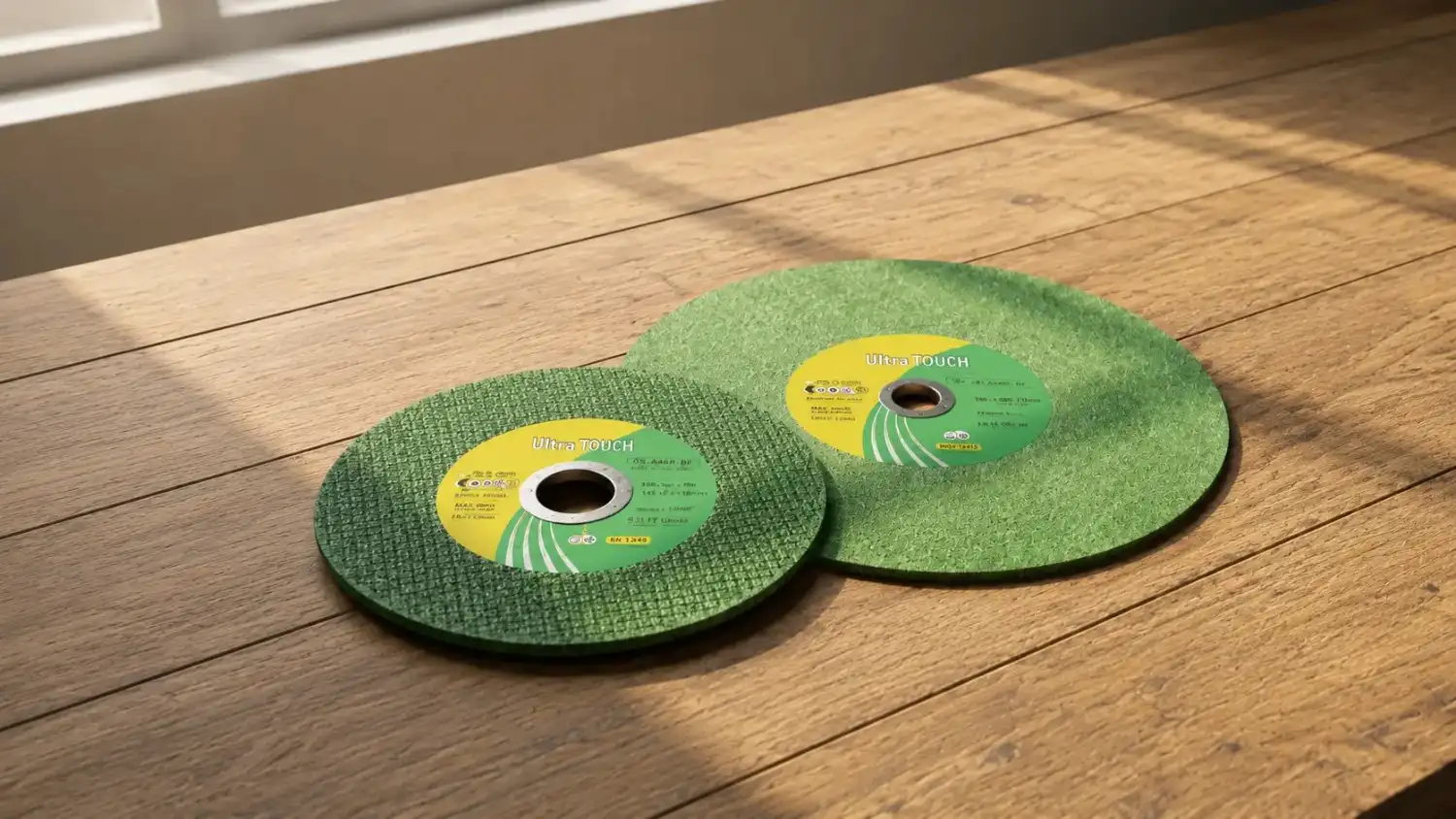
Walk onto any shop floor where metal's being shaped, smoothed, or cut down to size, and one small component quietly decides how the whole job turns out. A grinding wheel isn't just a spinning disc — it's the line between a clean finish and a ruined workpiece, between a safe shift and a dangerous one. Across fabrication units, workshops, and heavy industries in India, picking the right industrial grinding wheel isn't some minor line-item anymore; it affects output, safety, and cost, directly. Production lines run longer now, tolerances keep tightening, and even a small dip in wheel quality shows up fast — wasted material, a missed deadline, a machine sitting idle when it shouldn't be.
What is a Grinding Wheel?
A grinding wheel, put simply, is layers of abrasive grain fused into a disc with a resin, rubber, or ceramic bond, then spun at high RPM so the exposed grains shave off material through friction. That's what grinding actually is repeated micro-cuts across a surface, not one clean stroke. The bond matters almost as much as the grain itself, since it decides how the wheel wears: too soft and it erodes quickly, too hard and it glazes over and stops cutting efficiently. Steel needs a different formulation than aluminium or brass, and mismatching the two rarely ends well on the finished part.
Why Grinding Wheel Quality Matters
Wheel quality tends to show up the moment something goes wrong, rarely before. Cheap wheels wear unevenly across the face, drift out of balance, and every so often fracture under load — not something anyone wants standing next to spinning abrasive at several thousand RPM. A properly built Precision Grinding Wheel avoids most of that by design: even grain distribution, a bond rated for the wheel's stated speed, balance checked before it ships. That's the standard a serious wheel manufacturer holds itself to, testing strength and heat tolerance rather than assuming a batch is fine. It matters even more on floors running back-to-back shifts, where an unreliable wheel slows down the next operator who inherits it, too.
Types of Grinding Wheels
Not every task needs the same wheel. Here's how the common ones break down:
- Surface Grinding Wheel—flattens and finishes large, flat surfaces where tolerances actually matter
- Metal Grinding Wheel—built for steel, stainless steel, and other hard alloys, holds its edge well
- Cut-off wheels: thin profile, made just for slicing cleanly through stock
- Cup and disc wheels, mostly for angle grinders — edge work, deburring, that sort of thing
- Depressed centre wheels — handheld grinding on uneven or vertical surfaces
- Specialty wheels for marble, granite, or other non-metal surfaces where standard abrasives just don't cut it
Pick the wrong type and wheel life drops fast. Material gets wasted. Results get weaker, across the board.
|
Did You Know: A wheel's maximum RPM rating is fixed by recognised manufacturing standards — exceeding it, even briefly, is considered unsafe. |
Features to Look For
A handful of specs are worth checking properly before placing a bulk order, rather than assuming one wheel fits every machine:
- Grit size: coarse removes material fast, fine leaves a near-polished finish
- Bond type — resin, vitrified, rubber. Each reacts differently under heat and pressure
- Max RPM rating, has to match or exceed the grinder's own speed — never the other way round
- Wheel balance — get this wrong and you're looking at vibration, uneven wear, tired operators
- Certification marks, confirming the wheel actually meets recognised safety standards
- Wheel thickness: thin for fine cutting, thick when there's serious stock to remove
Nail the Grinding Wheel Selection down at this level, and it pays off twice over — less wasted material, and operators who aren't second-guessing every cut.
Product Overview
This is usually where buyers ask a fair question — kaha se ye lete hain, ya koi bharosemand Grinding Wheel Supplier hai jo seedha industry-grade wheels provide karwata hai? Established manufacturers usually stock a full range — surface, metal, specialty wheels — with each batch tested for cutting strength, balance, and safety before it ships. That way workshops aren't stuck choosing between availability and quality on a bulk order. Good suppliers go a step further too, helping buyers narrow down the right wheel for their machine, material, and daily workload — instead of leaving it to trial and error.
Benefits of Quality Grinding Wheels
Investing in a well-made industrial grinding wheel pays off in ways that show up daily, not just on paper:
- Cleaner, more consistent finishes, batch after batch
- Less downtime from wheels breaking or needing constant replacement
- Lower vibration — easier on the machine, easier on the operator
- Longer life per wheel, which adds up in material cost saved
- Safer to run continuously at high speed, shift after shift
- Production schedules get easier to predict once tool life stops being a guessing game
Applications and Use Cases
Grinding wheels turn up almost everywhere metal gets worked, including:
- Smoothing welded joints and rough edges after fabrication
- Prepping surfaces before painting, coating, or assembly
- Sharpening blades, tools, machine components
- Stripping rust, scale, or old coatings off metal parts
- Shaping work with a grinding wheel for metal, common across fabrication units
- Precision finishing in tool rooms and maintenance shops
Comparison Table
A quick side-by-side view of common wheel types helps simplify the decision:
| Wheel Type | Best Suited For | Key Trait |
|---|---|---|
| Surface Grinding Wheel | Flat surface finishing | Tight tolerance control |
| Metal Grinding Wheel | Steel and hard alloys | High material removal |
| Cut-off Wheel | Slicing through stock | Thin, fast-cutting profile |
| Cup / Disc Wheel | Edge work, deburring | Handheld manoeuvrability |
| Specialty Wheel | Marble, granite, non-metals | Custom abrasive formulation |
|
Fact: Properly balanced wheels reduce vibration enough to noticeably extend both the wheel's life and the grinder motor's lifespan. |
Expert Tips / Buying Guide
A few things worth keeping in mind before the next bulk order:
- Match grit to material hardness — not just habit
- Keep wheels stored flat, away from moisture, heat, and sudden temperature swings
- Check every wheel for cracks or chips before it goes on the machine
- Once wear hits the safety marking, replace it — don't push past that line
- Lean on an experienced grinding wheel supplier who actually understands your application
- Train operators on mounting pressure; over-tightening stresses the wheel unevenly
Get these basics right, and a routine purchase turns into a long-term productivity call, not a recurring cost you keep absorbing.
About Ultra Touch
Ultra Touch was founded in 1995, and is one of India's best manufacturers, suppliers, dealers and wholesalers of heavy-duty power tools. The company offers the highest quality and reliable power tools supported by a robust pan-India distribution network. Their tools are manufactured to perform in rugged industrial and professional conditions – designed to be robust, accurate and dependable. Ultra Touch manufactures ergonomic tools with a center of gravity positioned strategically and heat-resistant grips to keep the tools from becoming too hot. High-grade parts, along with well-balanced motors, enable the tools to cut, grind, drill and finish materials consistently without tiring the operator out.
FAQs
1. How do I know which grit size to pick for my job?
Ans: Honestly it comes down to two things — how much material has to come off, and how clean the surface needs to look afterward. Coarse grit works fast, but leaves a rougher texture behind. Go finer and it slows down, though the result ends up looking almost polished. If you're just knocking the excess off a weld, coarse is fine. Something that'll actually be seen once it's assembled deserves finer grit.
2. Why does my grinding wheel wear out faster than expected?
Ans: Two things usually cause it — too much pressure while grinding, or a wheel that wasn't right for the material to begin with. Both push the wheel past what it was designed to handle, and wear speeds up either way. Before blaming the wheel's manufacturing, look at how it's being used on the floor.
3. Can one grinding wheel handle every type of material?
Ans: Not really. Steel and stone don't respond the same way to the same wheel — the bond, the grain, none of it translates cleanly across materials. Try using a steel-rated wheel on aluminium or granite and you'll notice glazing, uneven wear, sometimes both. Sticking with a wheel actually made for the material saves time and keeps the job safer too.
4. What's the difference between a surface grinding wheel and a metal grinding wheel?
Ans: Surface wheels are built around flat work — big, even areas where the tolerance has to stay tight throughout. Metal wheels lean the other direction, made to chew through steel and stainless without dulling fast. You could technically call both of them grinding wheels, sure, but ask a machinist which one they'd reach for on a precision job versus a rough cut, and you'll get two very different answers.
5. How often should grinding wheels be replaced?
Ans: Once it hits that safety marking stamped into the wheel, swap it — not worth pushing further just to squeeze out a bit more use. Beyond that line, just keep an eye on it. Cracks, chips, anything odd before mounting. And how often you're actually running the wheel matters too; something used all day wears down way quicker than a wheel that only comes out occasionally.
6. Does wheel balance actually make a noticeable difference?
Ans: It does, and more than most people realize until they've felt it firsthand. An unbalanced wheel shakes the whole time it's spinning — your hand feels it, the motor feels it, and the wheel wears unevenly because of it. Keep things balanced and everything just runs smoother, the wheel lasts longer, and the results stop varying from one pass to the next.
Conclusion
A grinding wheel is a small part of a much larger operation, easy enough to treat as an afterthought until it fails at the wrong moment. Its quality still affects the finish on every part it touches, how safe the operator stays, and how often a machine goes idle waiting on stock that should've been reordered earlier. Sourcing from a dependable industrial grinding wheel supplier and matching the wheel to the actual job, is a fairly straightforward way for industrial teams to protect both their output and the people running the equipment.
| Looking for reliable, tested grinding wheels for your next project? Reach out today to Ultra Touch and get wheels built for real industrial demands. Contact Us Today! |