Why Does an Angle Grinder Lose Power Under Load?
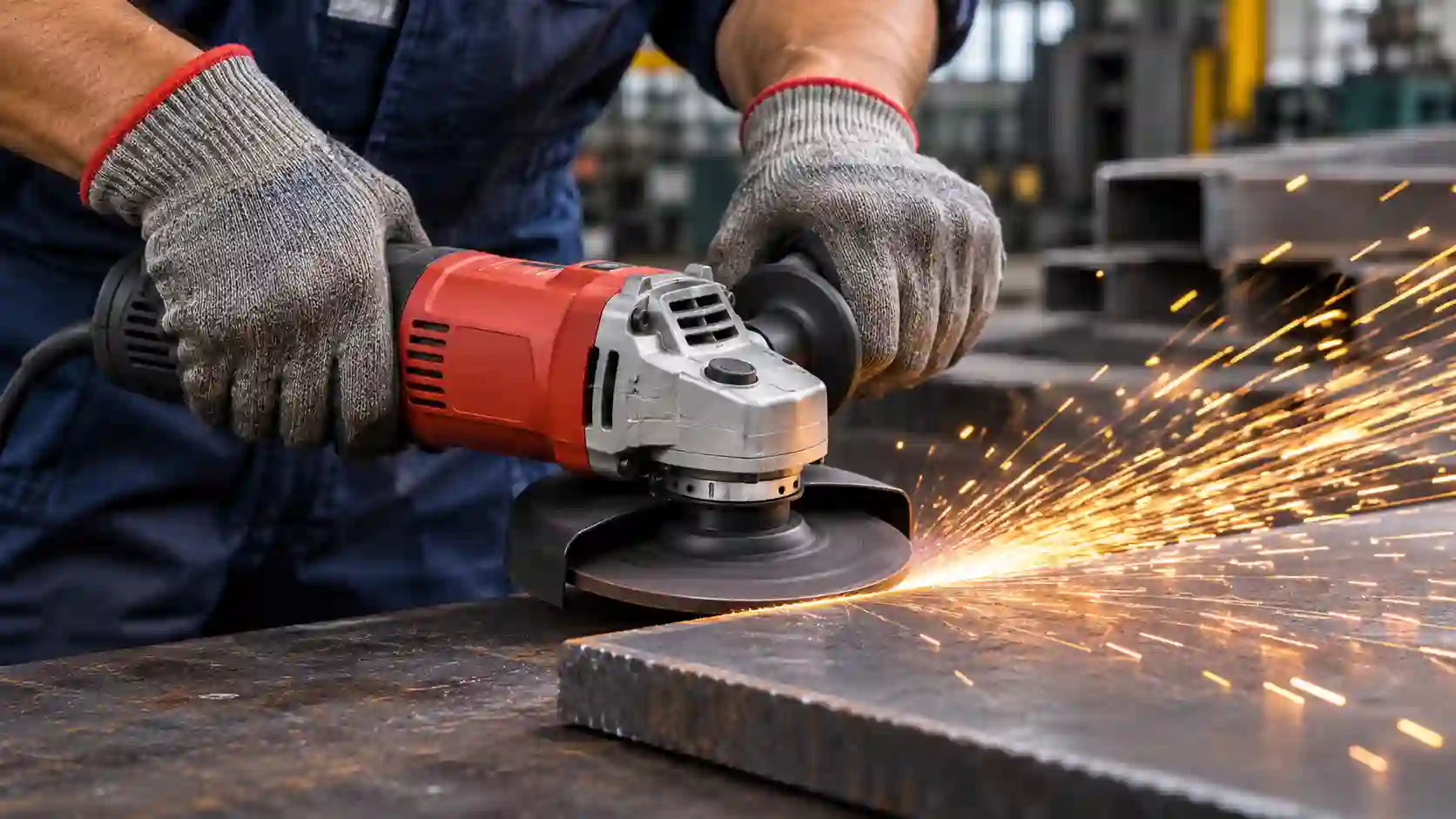
A fabricator is cutting thick steel plates. The disc bites in, the sound drops and the cut crawls. This is an angle grinder losing power under load, and it stalls the whole job. A brief dip in speed is normal on hard metal. A sharp fall, repeated stalling or burning smell is different. These problems waste working hours, wear out discs and can destroy the tool. Ultra Touch explains the causes and their cost to every industrial angle grinder user.
What Happens When an Angle Grinder Runs Under Load?
Each cut offers resistance to the cutting process, requiring the motor to work harder to continue rotating the disk. This leads to an increase in current and a reduction in spindle speed. Here is the difference:
- Normal: A brief dip that recovers once the cut settles
- Concern: Angle grinder RPM keeps falling or the disc nearly stops.
- Risk: An angle grinder under load in that state heats up, wears faster and leaves rough, uneven cuts.
Common Causes of Angle Grinder Power Loss
The causes of angle grinder power loss while performing heavy-duty tasks can be categorized into four categories. They are easy to identify, and it’s very easy to avoid them through simple practices. Go through each one without accusing the motor right away.
Excessive Cutting or Grinding Pressure
Pushing hard feels faster but does the opposite. Heavy force jams the disc and raises resistance on the motor. Here is what angle grinder overloading causes:
- Speed drops sharply mid-cut
- Motor and workpiece heat up within minutes
- The tool stalls, and a grinder losing power gets worse each pass
- Discs wear out sooner
Precision and care in using a sharp blade removes more metal than strength.
Incorrect or Worn Grinding Discs
The wrong disc makes a strong motor look weak. Choose an Industrial Grinding Wheel rated for your material and tool. Common mistakes include:
- A thin cutting disc used for heavy grinding
- A grinding disc worn to a stub, which rubs instead of cutting
- Wrong size or bore, adding drag and risk
- Cracked or glazed discs left in use
- A disc made for one metal used on a very different one
Blocked Airflow and Engine Overheating
Cooling air has to flow through the casing for winding protection; however, the presence of dust from metals, stone, and paint will block these channels. Signs include:
- Housing gets hot after short use
- Faint burning smell
- Weak airflow from the vents
- Does it shut down during long jobs?
- Motor pitch drops and stays low
That is why angle grinder overheating shows up in continuous work, and why the Angle Grinder Motor needs clear vents.
Electrical Supply or Motor Problems
Power can drop before it reaches the disc. These faults cause angle grinder motor problems that look like angle grinder power loss:
- Low supply voltage
- A long, thin extension lead
- Damaged cable or loose plug
- Overloaded sockets shared with other machines
- Old carbon brushes, a weak switch, or a defective armature
This will occur only when the engines are running together. Check the wires and plugs. In case this happens or sparks occur, one engine will have to shut off and call for a specialist.
How to Identify Angle Grinder Power Loss Safely
Early detection will save you the tool and the work you were doing. Signs include:
- Repetitive slow down while exerting pressure on it
- Grinding, rattling or whining noises
- Tool too hot to touch
- Sudden stoppage
In case you want to perform some angle grinder troubleshooting, ensure you unplug it before anything else. The following can be done externally:
- Look for any damages on the cable, plug, and switch
- Clear dust from the vents
- Examine the grinding disc
- Ensure the guard and flange fit well
Watch out for that point when it happens. If the slowness happens due to heavy cutting, then the problem lies with the pressure or disc. But if it happens without applying any pressure at all, the supply or motor is the reason behind it.
How to Prevent Power Loss During Industrial Use
Prevention costs far less than downtime. Ultra Touch recommends this routine:
- Match the disc to the material and the task
- Use light, steady pressure and let the speed recover
- Clear the vents after every shift
- Inspect cables and brushes every week
- Rest the tool during long, continuous jobs
- Store it in a dry place away from dust
- Replace a disc before it wears down to the flange
Train operators too, since many stalls come from leaning on the tool or using one disc for every task. The light duty angle grinder will not be able to function well due to overload hence there arises a need to apply a heavy duty angle grinder. Industrial Angle Grinder Maintenance activities which include cleaning and part replacement.
When Should You Repair or Replace an Angle Grinder?
One slow day is a reason to check. Slowing every week is a reason to act. Repair makes sense when:
- The fault is a worn brush, damaged cable or faulty switch
- The motor and body are otherwise sound
- The tool still suits your daily workload
- Spare parts and service are easy to get
Replacement is the better call in other cases. Consider it when:
- Repairs keep coming back
- The motor has overheated more than once
- The workload has outgrown the tool
- Repair bills reach half the price of a new tool
- The housing or guard is cracked
Ultra Touch advises you to do a cost comparison between repair expenses and an industrial angle grinder as well as lost hours. Time lost due to using a tool which constantly interrupts your work is much higher than the repair expense. Get the right tool for the job: a Heavy Duty Angle Grinder for daily usage and light one for less often tasks.
Conclusion
Causes are very evident as well as the solutions. Some important things to note include:
- Use light, steady pressure
- Fit the correct, undamaged disc
- Keep vents clear and cables in good shape
- Watch for slowing, heat and new noises
- Unplug before any check and leave internal faults to a professional
Observing safety practices protects both the operator and the machine, while having the right tools makes them easy to follow. In case you are choosing between various angle grinder manufacturers in India and suppliers, it is good to try the angle grinders offered by Ultra Touch. They are designed for industrial angle grinder use where there are lots of cutting and grinding activities.
|
Looking for a reliable angle grinder for your workshop? Ultra Touch offers dependable solutions for industrial cutting and grinding applications. Contact Us Now to find the right angle grinder for your requirements. |
FAQs
1. Why Does an Angle Grinder Lose Power During Cutting?
Some of the main causes that make the angle grinder have less power while cutting are pressure, the wearing of the disc, or electrical problems. Sometimes the grinder is expected to have less power, but if it continues having less power or even stops, then you should consider checking it.
2. Can a Worn Grinding Disc Cause Power Loss?
In this case, it is likely that either an old disc or an incorrectly set grinding disc could interfere with the cutting operation and create problems of lack of power while cutting. In this case, the disc is rubbing and not grinding.
3. How Do I Know If My Angle Grinder Motor Is Overheating?
Overheating is evidenced by heat in the motor’s casing, burning smell, low speed, and sudden stoppage. Blockage of the ventilation can lead to overheating. Stop the operation, disconnect the angle grinder, and wait for it to cool down before resuming operations.
4. Does Using an Extension Cord Affect Angle Grinder Performance?
Yes, an unsuitable extension cord will bring about voltage drops that will lower the effectiveness of the motor in cutting. Use the correct size of the extension cord to prevent such situations from arising.
5. How to Avoid the Angle Grinder Running Out of Power?
Choose the right disk and make sure that the constant pressure is applied, but not the vents are covered. Do not try to force the grinder to work on hard materials. Always inspect the condition of the cable and other exterior parts.
6. Should I Repair or Replace an Angle Grinder That Keeps Losing Power?
The choice to repair an angle grinder with a lacking power problem can work well if the part in question is easily replaceable such as the carbon brushes and the switch. If you have recurring motor problems and frequent overheating, then replacement can be the best option.