Reasons Why Your Cutting Wheel is Wearing Down So Fast?
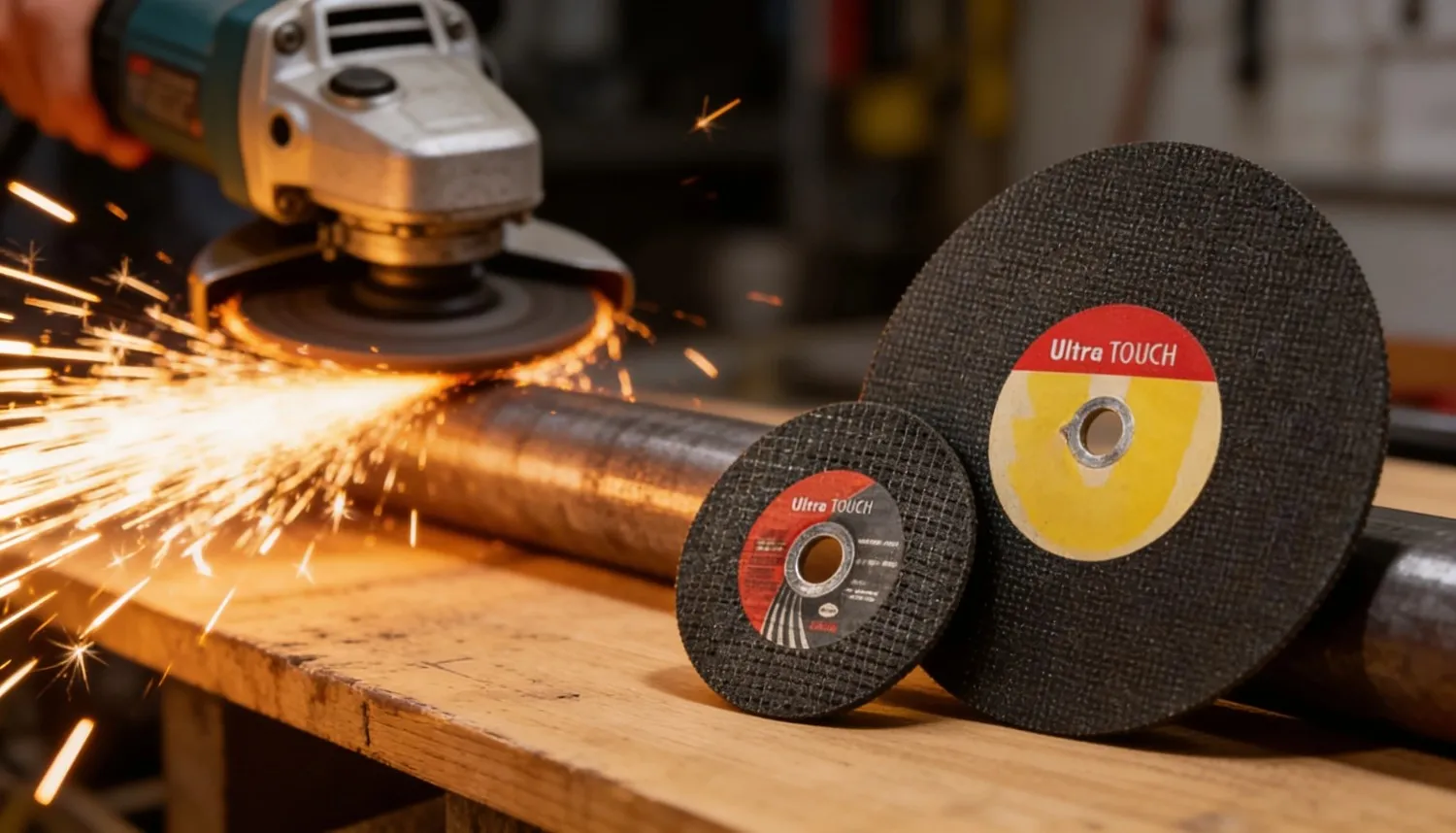
Did you ever take up your grinder and begin to cut and ask yourself why your cutting wheel wears out halfway through the job? It’s frustrating, right?
Ultra touch is one of the reliable Cutting Wheel Manufacturers In India to solve this problem. We shall begin by knowing what a cutting wheel is.
A Cutting Wheel (or cut-off wheel) is a wheel-shaped metal object which is often used with a power tool (such as an angle grinder) to cut hard materials such as metal, steel, stainless steel, tiles and so on. The first one is that we should know the process of cutting wheels.
How it works
A cutting wheel does not possess teeth like a saw but is a wheel of particles of abrasive. The abrasive particles scrape through the metal as it spins very fast and cuts through the metal. This is why you can occasionally get sparks when cutting metal.
The truth? The reason why most wheels wear out prematurely has less to do with luck and brand and more to do with cutting techniques, material mismatch, and some common, easily avoided, errors. In this blog, we'll be covering everything you need to know about why your cut-off wheel is wearing out too quickly, how to avoid it and how to select the best cutting wheels for your application.
So, whether you're a novice buying cutting wheels online or an expert purchasing from Cutting Wheel Dealers In India, this blog is for you. Let's see its key features.
Key features
- Narrow design for high-speed, accurate cuts
- Fast operation (runs at high RPM)
- Has an abrasive coat rather than teeth
- Work at high speeds, usually glass-reinforced
Fun facts: Did you know? Cutting wheels don't really cut – they grind through the material with abrasive particles.
About Us
‘At Ultra Touch, we are committed to producing power tools of high performance, which are meant to be used in real life. Our products are designed with a high level of durability, accuracy, and comfort for the user so that they can provide consistently high results even in harsh working environments. Since we use our tools in grinding and cutting, drilling and finishing, our tools are designed to serve professionals in workshops, construction sites, and industrial settings.
We also employ high-quality materials and advanced engineering to provide the best performance, service life and less fatigue for the operator. All our products are constantly tested and enhanced using actual user feedback in order to keep them reliable and efficient in all the tools we provide.
Having a robust pan-India distribution channel and customer-centric strategy, Ultra Touch guarantees on-time delivery, authentic products, and reliable customer service. Simplifying work to professionals through the delivery of tools that they are confident in makes us a trusted partner in productivity, performance, and long-term success.’
General Information
| Mistake | Why It Happens | How to Avoid It |
|---|---|---|
| Using wrong RPM wheel | Buying without checking tool specs | Always match RPM rating to your grinder |
| Cutting at wrong angle | Habit or haste | Maintain 90° angle; never tilt side-to-side |
| Applying too much pressure | Impatience for faster cuts | Let the wheel do the work; gentle, steady pressure |
| Using a damaged wheel | Overlooking cracks | Inspect every wheel before use — tap-test it |
| Wrong wheel for material | Using one wheel for everything | Match wheel type to material (steel, stone, SS) |
| Storing in damp places | Workshop storage habits | Store wheels in dry, cool, dust-free conditions |
Applications of a Cutting Wheel
Here are some easy uses of a cutting wheel:
- Cutting rods, pipes and sheets of metal
- Cutting steel and iron parts
- Cutting ceramics, marble, stone (with appropriate wheel)
- Cutting away rusted or worn-out pieces
- Preparing materials for welding
- Cutting TMT (reinforcement bars) for construction
- Cutting, shaping and bending metals
- Slicing through electrical conduits and pipes
- Do-it-yourself home repairs and renovations
- Vehicle repair and fabrication projects
Additional resources: you can have a look on this related to cutting wheels:
A Complete Guide on Polishing Wheels
The Effect of Different Materials on Wheel Life
Yes – and it is often an overlooked consideration. Using the wrong type of abrasive disc to cut stainless steel (whereas a mild steel wheel was designed), for instance, or to slice through concrete (whereas a simple metal cut-off wheel was designed). Different materials have varying degrees of hardness, thermal conductivity and friction. Cutting wheels are designed for materials with similar properties. Aluminium oxide cutting wheels are best for general steel, but stone, tile and hard alloys require silicon carbide or diamond cutting wheels. When purchasing cutting wheels, make sure you read the label! But, beyond this, people also make some mistakes that ultimately wear out wheels.
Fun Fact: A typical 4-inch cutting wheel 4 inch can reach 15,000 RPM (revolutions per minute) – much faster than most engine speeds!
The Hidden Mistakes That Wear Out Your Cutting Wheel
These are some common mistakes:
Too much pressure while cutting
This creates more friction and heat, wearing out the wheel.
Using the wrong wheel
Metal on stone (or stone on metal) wears out the wheel quickly.
Incorrect cutting angle
Cutting with an angle rather than straight on the wheel results in chipped edges.
High speed (RPM mismatch)
Running the grinder at a higher RPM than specified will wear the wheel quicker.
Continuous use without breaks
Heat lowers the bonding material capability, destroying the wheel.
Low-quality wheel
Low-quality cut-off wheels have a short lifespan due to low-quality abrasives and bonding.
Improper storage
Heat and moisture can cause the wheel to weaken even before it's used.
Using a cutting wheel for grinding
Cut-off wheels should not be used with side pressure – this leads to fast wear and breakage.
Wrong thickness selection
Thin wheels cut quickly but can wear quickly if improperly applied.
Machine vibration or improper fitting
Vibration and/or unsecured fit causes uneven wear and quicker deterioration.
How to Fix the Problem of Fast-Cutting Wheel Wear
1. Apply Light Pressure
Don't push the wheel. Let the wheel do the work. Too much force will make more heat and friction, which will damage the wheel. This will ensure smoother cuts and a longer lifespan.
2. Use The Correct Wheel For The Material
Use the right wheel for the job. There are different wheels for metal, stainless steel and stone. This ensures optimal performance and less wear.
3. Cut at the Right Angle
Grasp a cut-off wheel at right angles. Never tip or grind (this will give the wheel uneven wear and ruin it).
4. Check RPM Compatibility
Ensure the grinder's speed is within the wheel's recommended RPM. Operating at speeds beyond the wheel's RPM may shorten its life and pose safety hazards.
5. Avoid Overheating
Take breaks while cutting for extended periods. Overheating can cause the bonding material to break down. Cooling will help it last longer.
6. Use Good-Quality Wheels
Always remember that very inexpensive wheels wear out much faster. Connect only with reputed brands for high-quality wheels.
7. Store Wheels Properly
Store cutting wheels in a cool, dry area. Keep them away from moisture and sunlight, which can cause them to weaken.
8. Select Appropriate Wheel Thickness
Choose the appropriate thickness for the job. Thick wheels are slower but will outlast thin wheels. Select the right one for the job.
9. Ensure Proper Mounting
Ensure the wheel is properly and securely mounted on the grinder. This can lead to vibration and an uneven surface.
10. Use the Correct Tool
Never grind using a cut-off wheel. They are not designed to do that.
Fun Fact: Cutting wheels don’t actually “cut”—they grind through material using tiny abrasive particles.
Technical Table
| Wheel Type | Diameter | RPM (Max) | Best For | Thickness |
|---|---|---|---|---|
| Standard Cut-Off Wheel | 4 inch (100mm) | 13,300 RPM | Mild Steel, Iron | 1.0 mm – 1.6 mm |
| Thin Cut-Off Wheel | 4 inch (100mm) | 13,300 RPM | Stainless Steel, Sheets | 0.8 mm – 1.0 mm |
| Heavy-Duty Grinding Wheel | 4.5 inch (115mm) | 11,500 RPM | Weld Grinding, Stone | 6.0 mm |
| Diamond Cutting Wheel | 4 inch (100mm) | 12,000 RPM | Tiles, Concrete, Granite | 1.6 mm – 2.0 mm |
| Flap Disc Wheel | 4 inch (100mm) | 12,200 RPM | Finishing, Deburring | N/A (layered) |
FAQs
Here are a few of your common questions about cutting wheels:
1. How do I know if my cutting wheel is worn out?
You will feel slower cutting, have more sparks, and cut unevenly. It might also shrink rapidly or not perform as efficiently. This indicates it's time to replace it.
2. Is it safe to use a damaged cutting wheel?
No, it's unsafe to use a damaged wheel. The wheel may shatter while being used and cause significant harm. Check the condition of the wheel before using and replace if necessary.
3. My cut is not neat and straight. Why?
This is most likely caused by the wrong angle or uneven pressure, or a worn-out wheel. A good technique and steady hand will help achieve accurate cuts.
4. Does storage impact a cutting wheel's performance?
Yes, it can affect the wheel. Water and high temperatures can affect the bond, weakening the wheel and decreasing its performance.
5. How long should I use a cutting wheel?
This varies, depending on the material and usage. The wheel should be replaced when it slows down or cuts unevenly or when it's too small to work with.
6. Is it OK to use the same wheel for cutting different materials?
It’s not recommended. Different wheels are designed for different materials. A single wheel won't work well on all materials and will wear out quickly.
7. My cutting wheel vibrates while I'm using it. Why is that?
This may be due to incorrect fitting, worn wheels or an unbalanced grinder. This can be resolved by proper installation and inspecting the tool.
8. Is it better to have a thicker cutting wheel?
Not necessarily. Thicker wheels wear longer, but cut more slowly; thinner wheels wear faster but cut quicker. It all depends on what you need it for.
Additional Resources: check out this
Marble Cutters Guide: Professional Marble Cutting Tools for Stone Cutting
Conclusion
Choosing an appropriate cutting wheel is not rocket science but only requires some knowledge. The moment you select the wheel based on what material you will be cutting, the diameter, the thickness and the machine upon which it will be utilized, you are making a better wheel and a better life for the wheel. Apparently simple details like RPM, fit and quality of the wheel all play to its performance. Ultra touch is the prominent Cutting Wheel Suppliers in India.
Instead of purchasing the cheapest, it will be prudent to look at the quality and specifications and obtain a product that you do not have to change frequently and thus spend even more money. The appropriate cutting wheel will cut faster, have a longer life and will be safe to use. And finally, the right cut-off wheel is the one that fits your application, tool and use habits, enabling you to effectively get the job done each time. Buy cutting wheels only after confirming all the factors related to them.
"If you want to avoid wasting 70% of your abrasives, try our cutting wheels. Designed with research on thermal equilibrium in mind, all grains get to work." [Get Research-Based Cutting Wheels at UltraTouch] Also deal in grinder cutting, wheel cutting. Contact Us Now.