Polishing Wheels: Types, Uses & Manufacturer Selection Guide
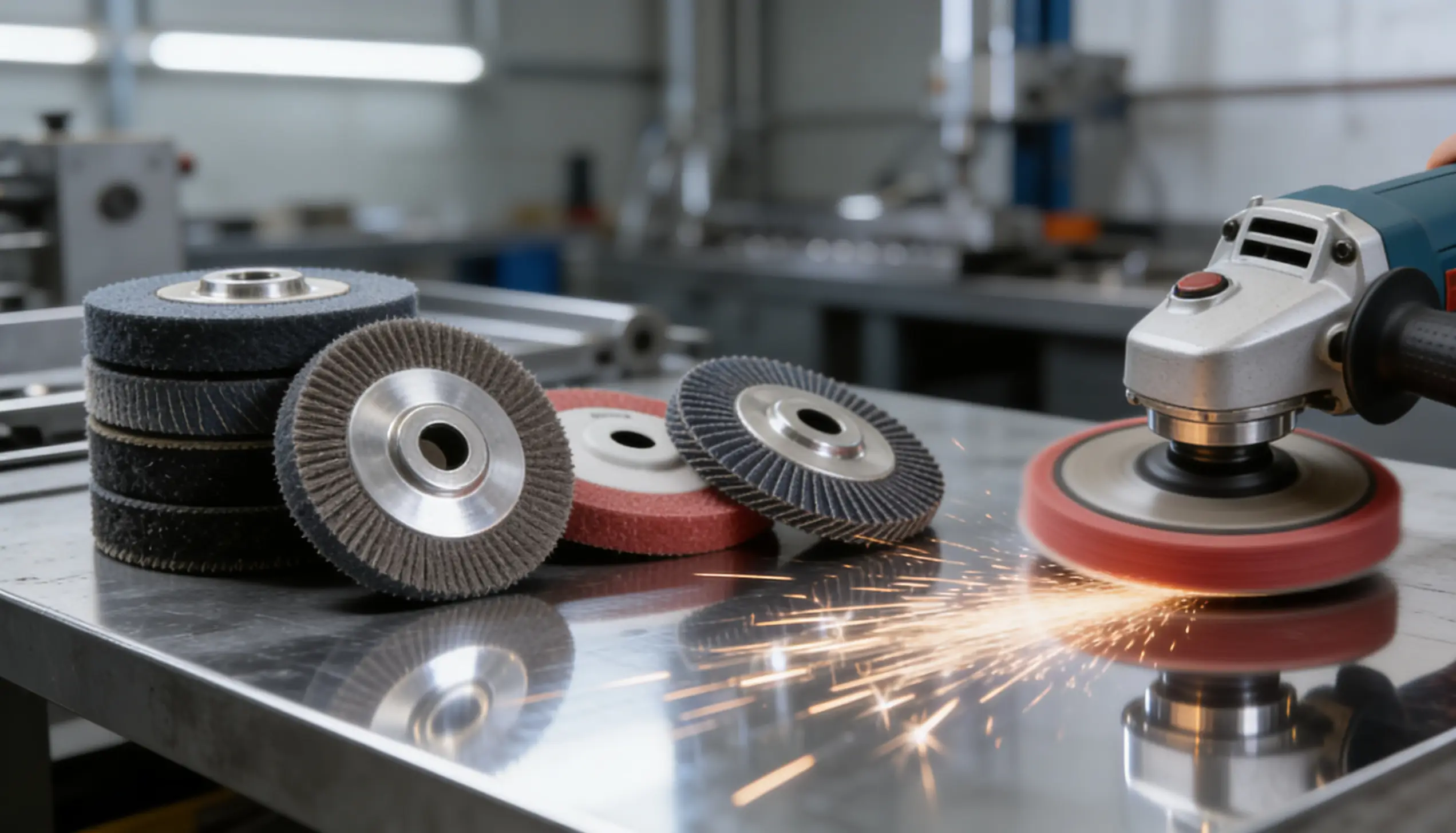
Have you ever looked at a mirror-finished metal surface and wondered — how did they get it that smooth?
Behind all those perfect surface finishes, the chrome bumper of that luxury car, the scalpel used in the operating room or the jewellery in the display case, there is a polishing wheel that is working. It is one of those unsung heroes of industrial production; it is hardly discussed, but it cannot be substituted at all.
This guide is the one you need in case you are in manufacturing, fabrication, or any other industry that requires precise surface finishing. We are breaking down all that you need to know about polishing wheels—how they are made to work, how to select the best one and why the company that makes the wheel is as important as the wheel itself.
What Is a Polishing Wheel?
A Polishing Wheel is an abrasive or buffing tool that is fixed on a spindle or arbour and is used to polish, shine off or finish surfaces on many different materials – metals, plastics, wood, composites and more. Consider it as the last handshake between a raw material and a finished product.
Unlike grinding wheels, which cut away a large amount of material, polishing wheels are designed to be refined. They are supposed to remove micro-scratches, oxidation and surface-level dents and scars – and leave behind a surface that is not only aesthetically pleasing but also actually better in functionality. In high-tolerance industries, the distinction between a polished and unpolished surface may have a direct effect on the performance of the product, its resistance to corrosion and its durability.
How Do Polishing Wheels Work?
A polishing wheel essentially functions based on regulated abrasion and friction. As the wheel spins at a high speed and contacts a workpiece, with or without a polishing compound, microscopic flaws are gradually removed from the surface.
Here's the basic process:
The wheel is rotated at a predefined RPM which is decided by the machine. A rough substance (such as rouge, tripoli or white diamond) is rubbed over the wheel. When the wheel touches the surface it is abrading and buffing at the same time. The end effect is an increasingly smooth finish – roughly cut, medium buffed and finally high-gloss polished.
The science of it includes grain size, density of wheels, rotational velocity and pressure. An appropriate wheel and compound set can polish a steel surface that is 400-grit rough in a few minutes to a mirror finish.
Industries That Use Polishing Wheels
Niche tools are not polishing wheels. Their applications in a diverse range of industries with their own specific needs are surprisingly broad.
- Automotive – Starting with engine parts to body parts and custom rims, polishing wheels play a significant role in bringing out the showroom look that consumers desire.
- Aerospace – Turbine blades, structural parts and hydraulic fittings demand the highest level of accuracy in the surface finishing to avoid compromising safety and aerodynamic requirements.
- Jewellery & Silverware – The wheel is virtually essential in the high-lustre treatment of gold, silver and platinum work.
- Medical Devices – Surgical implements, implants and diagnostic equipment need contamination-free polished surfaces which are biocompatible.
- Cutlery & Hardware Mass – Produced knives, handles and fixtures are finished on high-speed polishing wheels within automated systems.
- Furniture & Architecture – Stainless steel panels, ornamental fittings, and metal furniture rely on a uniform finish of surfaces to provide a value of appearance.
Trivia: The oldest known polishing tools are over 4,000 years old; ancient Egyptians made the abrasive stones and used animal fat to polish copper and gold items. The modern polishing wheels are only a sophisticated development of the same principle.
Types of Polishing Wheels
Not all polishing wheels are the same. The right wheel solely relies on the material you are working with, the finish you are aiming at and the machine to be used. Some of the common Polishing Wheel Types are:
- Sisal Wheels – These are cutting wheels made out of natural sisal fibre that are aggressive and are applied during the first stages of the polishing process to remove deep scratches, oxidation and scale.
- Cotton Buff Wheels – One of the most popular, cotton buff wheels come in a variety of ply counts to be more or less aggressive. Final-stage polishing and high-gloss finishing on metals, plastics and even painted surfaces are done using softer cotton buffs.
- Felt Wheels – Dense, firm felt wheels are applied in precision polishing hard materials such as glass, ceramics, hardened steel and stone.
- Non-Woven Abrasive Wheels – These wheels are composed of synthetic fibres that are bonded with abrasive particles. They are exceptional in light deburring, blending and finishing but do not load up or glaze. Commonly used in stainless steel and aluminum.
- Muslin Wheels – The muslin wheels are softer and more flexible compared to regular cotton buffs; these are suitable for the contours and complex shapes. They adhere to the workpiece and thus are ideal in jewellery, cutlery and architectural fittings.
- Spiral Sewn Wheels – The spiral sewn wheels are made of tightly sewn construction, making them firm and aggressive and can be used to cut heavily on flat surfaces.
- Loose Leaf / Ventilated Wheels – These are looser and more open and thus keep the wheel cool when it is in operation over extended periods. Applied in high-gloss finishing in situations where accumulation of heat may destroy the workpiece or compound.
Benefits of Using High-Quality Polishing Wheels
It is a wrong economy to cut corners on polishing wheels. This is what makes the difference between quality wheels and low-cost alternatives:
- Consistency – Premium wheels will provide consistent finishes over thousands of cycles compared to low-grade wheels that wear out easily and give them uneven finishes.
- Longer Wheel Life – High-quality materials and construction will result in fewer changes of wheels, reduced downtime and reduced unit finishing costs.
- Improved Compound Retention – Quality wheels are better at retaining polishing compounds, with less material being used to get the same finish.
- Reduced Heat Buildup – Correct construction of wheels reduces the heat of friction, protecting the piece of work and the operator.
- Compliance Ready – Surface finish documentation is usually needed in regulated industries, such as medical and aerospace. Compliance is easily achieved by the use of certified, consistent wheels.
Did You Know?
A typical mirror finish on stainless steel should have a finish roughness of Ra 0.05 icas or less, equivalent to one thousandth the thickness of a human hair. This can only be consistently done through the correct combination of type of wheel, compound, and technique.
How to Choose the Right Polishing Wheel
There are numerous choices but five factors are important in selecting the appropriate polishing wheel:
- Workpiece Material – More dense and more abrasive wheels are required when working with harder materials such as hardened steel, ceramics or titanium. The softer materials, such as aluminum or brass, should have softer wheels so as not to gouge.
- Desired Surface Finish – Are you aiming for a satin finish, brushed finish or mirror polish? Every level of finish needs a particular combination of a wheel and a compound. Define your Ra target and make a choice.
- Wheel Diameter and Speed – Adjust wheel diameter and RPM to your machine. Operating a wheel faster than its rated speed is a grave safety concern and reduces the quality of finish.
- Application (Manual vs Automated) – Automated production lines demand wheels designed to be highly durable in terms of the number of cycles per hour. Manual applications can be more versatile in wheel selection but are also made of professional-grade materials.
- Compatibility of Compounds – Not all compounds are compatible with all wheels. Sisal wheels are used in combination with more aggressive compounds, such as tripoli; the softer cotton buffs are used with fine rouge or white diamond to work a high gloss.
In any case, refer to your manufacturer. A reputable supplier will always assist in choosing the right combination for your particular application.
Why Customers Choose Ultratouch Polishing Wheels
Consistency is all in surface finishing. A polishing wheel that works well in one scenario but does not work in the conditions of continuous production may raise downtime and waste material and endanger the quality of the finish. That is why manufacturers in all industries rely on Ultratouch to provide:
- Good-quality polishing wheels to be used in finishing surfaces.
- High-quality raw materials to ensure longer life of the wheels and performance.
- Applicable to automobiles, aerospace, medical, jewellery, and metal.
- Special wheel making according to usage needs.
- Good retention of compounds to achieve good polishing.
- Stringent quality management of reliable and repeatable performance.
- Works with either manual or automated polishing.
- Products that save downtime and rework and are cost-effective.
- Manufacturers rely on it due to its long-lasting life, accuracy and finish.
About Us
Ultra Touch supplies high-performance industrial polishing wheels for reliable surface finishing across multiple industries. We manufacture polishing solutions using quality raw materials, strict quality checks, and application-focused designs to ensure consistent finishing results. Our range includes standard and custom polishing wheels for metal, glass, wood, plastic, and composite applications. From large production units to small workshops, Ultratouch helps businesses achieve smooth, precise, and professional finishes with dependable polishing solutions.
Contact Our Team for expert guidance and the right polishing wheel for your application.
FAQs
Q1: What is the difference between a polishing wheel and a grinding wheel?
Grinding wheels remove material aggressively, while polishing wheels improve surface shine and smoothness with minimal material removal.
Q2: How do I choose the right polishing compound?
Use coarse compounds with hard wheels for cutting and fine compounds with soft wheels for mirror finishing.
Q3: How long does a polishing wheel last?
A polishing wheel lasts longer with proper speed, pressure and maintenance. Replace it if wear becomes uneven.
Q4: Can polishing wheels be used on non-metal surfaces?
Yes, polishing wheels can polish glass, plastic, wood, ceramics, and composite materials with the right compound.
Q5: What safety precautions should I follow?
Always wear safety gear, inspect the wheel before use, and never exceed the recommended RPM limit.
Q6: Can I get custom polishing wheels?
Yes, custom polishing wheels are available in different sizes, materials, and specifications for specific applications.
Conclusion
Surface finishing is not an afterthought; it is where a product gets its value. Whether you're polishing surgical steel or crafting a luxury watch case, the quality of your polishing wheel directly determines the quality of your final product. And by selecting the best Polishing Wheel Manufacturer, you are not only purchasing a wheel; you are also buying into a consistent performance, less wastage, and a self-recommending finish.
Looking to upgrade your surface finishing process?
Call Ultra touch today and let our technical staff assist you in choosing the ideal polishing wheel to use. You may require off-the-shelf reliability or tailor-made solutions; we are there to assist you in accomplishing the finish your products require.